

HOW TO PREPARE FOR CQC
Patient, staff and provider feedback: Why it matters and how to collect it
Feedback is one of the clearest ways to show that your clinic listens, learns and acts on what it hears. Here, we explore how to gather meaningful feedback from patients, staff and providers and use it to strengthen both everyday practice and regulatory preparedness.
 |
Dr Jonathan Andrews, CQC Compliance Consultant, Govanta Compliance |

Collecting and acting on feedback is a key part of running a high-quality healthcare service and central to CQC’s assessment.
For providers preparing for CQC registration or inspection, feedback demonstrates something inspectors look for beyond policies and forms: a genuine commitment to learning and improving.
But collecting feedback should be something that’s important to you all year round: it’s about building a culture of listening, learning and continuously improving care. It helps you understand how your service feels to the people who experience it every day: patients, team members and clinical leaders alike.
When feedback is working well, it becomes part of the rhythm of your service rather than a separate task on a compliance checklist.
Why feedback is important
In the simplest terms, feedback helps you see your service through other people’s eyes.
It shows you’re paying attention not only to clinical safety and effectiveness, but also to dignity, communication, responsiveness and staff wellbeing. The CQC is also particularly interested in your collection of feedback for the following reasons:
- Demonstrates ongoing improvement: CQC wants evidence of reflection and change.
- Shows engagement: Feedback, particularly from patients, is crucial for assessing service responsiveness.
- Supports compliance: Staff feedback reveals training and safeguarding strengths and areas for attention.
Under their ‘Responsive’ and ‘Well-Led’ domains, the CQC is particularly interested in how providers respond to feedback, not just whether they collect it. Asking for opinions is only the first step. What really matters is what happens afterwards.
What CQC looks for
CQC inspectors will ask about your mechanisms for collecting and acting on feedback. Be ready to demonstrate anonymous surveys, open-door policies, feedback boxes and structured meetings. Evidence should show you consult people routinely, respond to their concerns and ‘close the loop’ by implementing improvements.
.webp?width=800&height=419&name=Article%20Image%20-%20Quote%20E%20(3).webp)
Practical tips for collecting feedback
- Use short, targeted surveys for patients after appointments. Try a link to Google Forms or SurveyMonkey in a triggered email or iPad kiosks in reception.
- Offer anonymous digital feedback channels, such as web forms where any identifiable details aren’t needed to submit.
- Run regular staff forums or discussion groups. Monthly meetings and appraisals are also good opportunities to discuss feedback one-on-one. Send out quarterly staff surveys - and keep them anonymous for honesty.
- Audit provider feedback through structured appraisals and peer reviews.
- Record, analyse and act on feedback. Show the outcomes in your practice documentation and share them with your team.
What good feedback systems look like
Inspectors are looking for evidence that feedback is part of everyday practice rather than something done occasionally. It can help to think of feedback as a cycle:
You listen.
You reflect on what you hear.
You make changes where needed.
And then you check again to see whether the change made a difference.
Providers who perform well typically have clear ways of showing this cycle in action. For example, if a patient mentions that appointment information was confusing, a good service might update its communication template, share the update with staff and then later check whether patients find the new version clearer.
The key idea is simple: feedback should lead somewhere.
Sample feedback questions
For patients:
- How would you rate your experience with our service?
- Were you treated with dignity and respect?
- Was your consent gathered adequately before procedures?
- Is there anything that could improve your care or experience?
For staff:
- Do you feel able to raise concerns safely?
- Are you confident in the training provided?
- Is communication open and inclusive within your team?
For providers (managers/leads):
- Are protocols regularly reviewed and updated?
- Do staff feel supported in handling challenging situations?
These questions help build a feedback culture and ensure that everyone, from patients to staff and providers, contributes to continuous improvement.
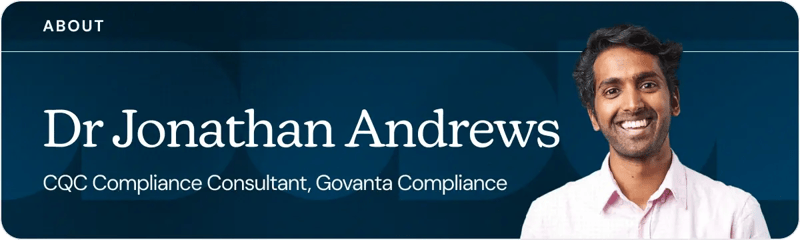
Dr Jonathan Andrews is a Medical Director and practising doctor working across both the NHS and private healthcare. In addition, Jonathan also leads Govanta Compliance, a CQC consultancy dedicated to demystifying the inspection process and helping practices achieve successful outcomes. He advises start-ups and scale-ups and delivers educational services across a broad range of topics.
.webp?width=380&height=201&name=Building%20a%20culture%20(2).webp)
-1.svg)