

HOW TO MAINTAIN CQC COMPLIANCE
Building a culture of continued CQC excellence
A strong CQC performance is usually the result of good habits built over time. When open communication, feedback and continuous improvements are part of everyday practice, compliance becomes much easier to sustain.
 |
Dr Jonathan Andrews |
.webp?width=600&height=317&name=Building%20a%20culture%20(2).webp)
The clinics that feel most confident on CQC inspection day usually aren’t the ones doing a last-minute scramble for audits and key documents. They’re the ones where good governance, strong teamwork and continuous improvement are already part of everyday life.
That’s what a culture of continued CQC excellence really looks like.
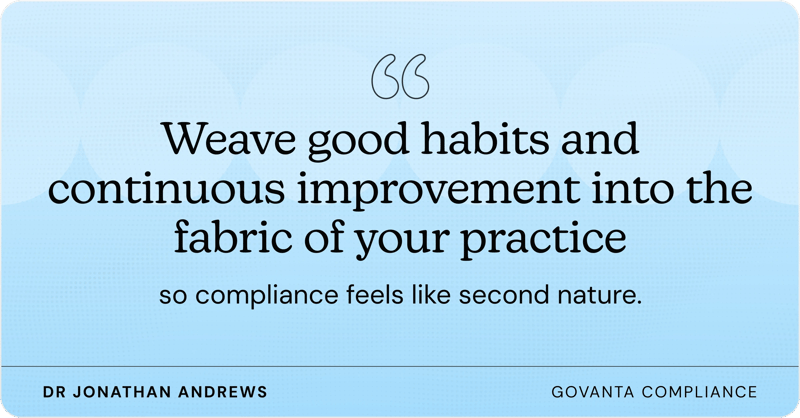
You don’t have to turn your team into a compliance machine to be successful at this. The aim is to weave good habits, clear governance and continuous improvement into the fabric of your practice, so compliance feels like second nature.
Safe, effective, patient-centred care is supported by habits that happen consistently: feedback is discussed, learning is shared, audits lead to action and staff feel able to speak up when something isn’t right.
Research suggests that these cultural factors matter. Staff engagement, psychological safety, meaningful use of patient feedback and regular quality improvement activity have all been linked to stronger safety cultures and better care outcomes in healthcare settings.
Build a feedback culture, not a form-filling culture
Most clinics already collect some form of feedback. The challenge is making sure it actually means something.
Reviews of patient experience data in healthcare show that feedback has real potential to drive quality improvement, but only when it is interpreted, discussed and acted on, rather than simply gathered.
A healthier feedback culture is one where feedback is:
- Easy to collect
- Safe to share
- Discussed openly
- Acted on visibly
- Linked back to real improvements
To make that happen, it helps to close the loop. For example:
- Celebrate improvements made from feedback. If a patient comment led to a clearer booking process, a better follow-up message or a smoother check-in experience, say so.
- Include staff in reviewing patient feedback. This helps everyone see quality improvement as a shared effort, not something that belongs only to management.
- Use anonymised patient quotes in team meetings. A short quote often lands more powerfully than a survey score. It helps teams connect service improvements to real patient experiences.
Create a culture where people can speak up safely
A culture of excellence depends on people feeling able to raise concerns, share ideas and flag risks early. That’s especially important in healthcare, where frontline staff are often the first to notice when something is slipping, whether that’s a process issue, a communication gap or a safety concern.
The challenge is that many people stay silent if the environment doesn’t feel safe. That means building this simple shared principle into your culture:
We talk about problems early, openly and without blame, because that’s how we protect patients and support each other.
That doesn’t remove accountability. It just makes it easier for people to raise issues before they become bigger ones.
And just as importantly, you must make space to talk about the wins too. Celebrating what’s working helps reinforce the behaviours you want to see more of. It builds confidence, morale and shared pride in standards.
Make audits feel useful, not intimidating
Audits sound pretty formal, but when they’re done well, they’re one of the most practical tools you have for maintaining standards over time. The key is framing.
Instead of presenting audits as something done to the team, position them as something done for the service:
- A way to spot risks before they escalate
- A way to check whether processes are working in real life
- A way to identify small, manageable improvements
- A way to build steady confidence rather than inspection panic
Regular audits also help avoid the stop-start cycle of “inspection panic”. Rather than scrambling to review records or check compliance before a visit, you’re building confidence steadily over time.
Even better, share outcomes with the wider team. Let people see what was reviewed, what was learned and what changed next.
Break down CQC silos
CQC readiness is rarely strengthened by one person carrying the burden alone.
When governance, patient experience or safety sits with one lead or one department, silos form quickly. Important insights get missed and quality can start to feel like someone else’s job.
To build a stronger multi-team approach:
- Encourage cross-team conversations about patient experience
- Involve clinical and non-clinical staff in service reviews where appropriate
- Share learning from incidents or complaints across the wider team
- Make responsibilities clear, but keep ownership collective
Reception teams, clinicians, managers, finance staff and administrators all see different parts of the patient journey. Bringing those perspectives together often surfaces the most valuable improvements.
Continued excellence is built over time
A culture of continued excellence is seen in a team that cares about doing things well every day and has the trust, habits and structure to keep getting better.
When that culture is in place, CQC readiness feels less like pressure and more like proof of the good work already happening.
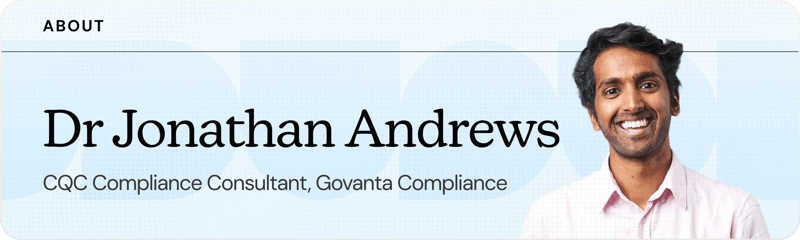
Dr Jonathan Andrews is a Medical Director and practising doctor working across both the NHS and private healthcare. Jonathan also leads Govanta Compliance, a CQC consultancy dedicated to demystifying the inspection process and helping practices achieve successful outcomes. He advises start-ups and scale-ups and delivers educational services across a broad range of topics.
.webp?width=380&height=201&name=Ongoing%20requirements%20(1).webp)
-1.svg)
.webp?width=380&height=201&name=Regular%20CQC%20audits%20(1).webp)