

HOW TO PASS YOUR CQC INSPECTION
Facing failure: What happens if you don’t pass your CQC inspection
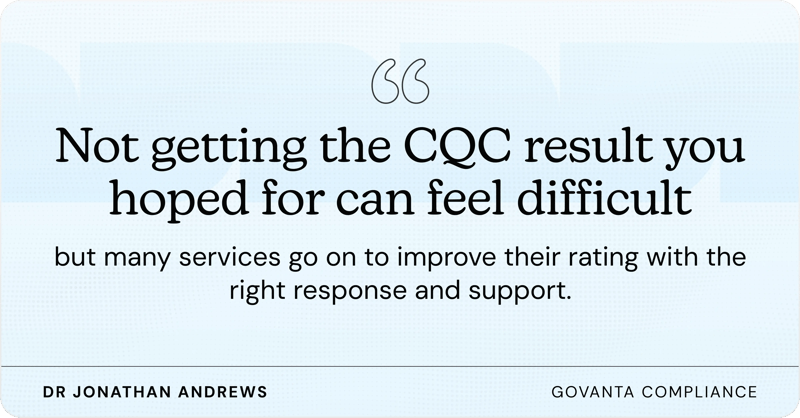
Not getting the CQC result you hoped for can feel difficult, but many services go on to improve their rating with the right response and support. Taking time to understand the report and how to turn findings into an action plan can make the path forward feel much clearer.
 |
Dr Jonathan Andrews |
.webp?width=600&height=317&name=Facing%20failure%20(1).webp)
Deep breath. First things first, remember that not passing a CQC inspection is not the end of your practice. Plenty of practices have been in your position before and will have gone on to pass.
It can feel heavy and let’s be honest, a bit personal, especially if you’re a solo clinician or leading a small team. A disappointing outcome can trigger worry about your reputation and the future of the service you’ve worked hard to build. But many well-run services don’t achieve the rating they hoped for the first time and what matters most isn’t the initial outcome, but how you respond next.
This page is designed to steady your breathing, explain what actually happens if you don’t pass and help you move forward with clarity and confidence.
If this just happened, don’t panic
A disappointing CQC outcome can feel overwhelming. Right now it’s not about having all the answers, but instead keep yourself grounded in facts.
What doesn’t happen immediately:
- Your service isn’t shut down on the spot.
- You won’t need to present a full improvement plan today.
- You’re not being judged as a person; the inspection reflects care and processes at a moment in time.
Remind yourself this is a regulatory process to improve quality. If you have a team, tell them you’re taking time to understand what’s next. Calm leadership in those first hours sets the tone for what follows.
Others worry about what patients will think. While ratings are published, patients also value openness and evidence that a service is taking action. Being transparent and focused on improvement often reassures rather than alarms.
When will you find out you haven’t passed?
CQC inspections don’t usually end with an on‑the‑spot verdict. After the inspection, inspectors review their findings and compile a report. The CQC say they publish their reports within three months of inspection and you will have the opportunity to check for factual accuracy before publication. Only once this process is complete is the final report published, including your rating and any required actions.
What does ‘not passing’ actually mean?
CQC doesn’t operate a simple pass or fail system, but uses a rating system. Ratings range from Outstanding through to Inadequate:
Outstanding: The service is performing exceptionally well.
Good: The service is performing well and meeting our expectations.
Requires improvement: The service is not performing as well as it should and we have told the service how it must improve.
Inadequate: The service is performing badly and we've taken action against the person or organisation that runs it.
CQC evaluates services against five core questions: safe, effective, caring, responsive and well-led. Here are some common examples of inadequate evidence the CQC see for each of these Five Key Questions:
Are they safe?
- There’s no analysis available of significant events
- Safeguarding protocols are not robust and the staff aren’t appropriately trained
- Staff aren’t screened properly when they’re recruited
Are they effective?
- There are no clinical audits or evaluations of the service
- Patients aren’t cared for using up-to-date best practice
Are they caring?
- There’s little concern for patients’ privacy and dignity in reception and waiting areas
- There aren’t lists of people at the end of life or sharing this information with out-of-hours services
Are they responsive to people's needs?
- There’s poor availability of appointments at times which suit patients
- It’s difficult to contact the practice by telephone
- There are no same-sex clinicians
Are they well-led?
- An absence of vision for the organisation
- There’s a lack of clarity in roles and responsibilities to run the practice day-to-day
- There’s poor visibility of leaders and no whole-practice meetings
Crucially, most of the issues flagged in reports are about systems, documentation and consistency, not clinical competence. Your care may be valued by patients, but the inspection looks at whether your processes reliably support safe, consistent outcomes.
An ‘Inadequate’ rating means CQC will take a closer interest in what happens next, but it doesn’t mean the service is condemned to immediate closure. It means standards need to improve in specific areas.
What happens next?
After the report is issued, CQC will outline the actions you’re expected to take. Some will be mandatory, linked directly to regulations, while others are recommendations designed to support good practice. These actions usually come with clear timescales, often ranging from a few weeks to several months, depending on the level of risk identified.
You’ll be expected to respond with an action plan showing how you intend to address each point. This doesn’t need to be overly complex, but it does need to be clear, realistic and achievable. Inspectors are not looking for perfection; they want to see that you understand the issues, have taken ownership of them and are actively working to improve.
If your service is rated ‘Inadequate’ overall, CQC is likely to take action to ensure improvements happen promptly. One formal framework they use is called special measures.
The purpose of special measures is to:
- Ensure that providers found to be providing inadequate care improve within a clear timeframe
- Provide a framework for support and enforcement
- Set expectations for measurable improvement, with checks and oversight in place
Here’s how it works in practice:
• If you’re ‘Inadequate’ overall: You may be placed into special measures immediately.
• If only one area (one of the five key questions) is ‘Inadequate’: CQC will usually give you up to six months to improve before deciding whether to put you into special measures.
Once in special measures, you’ll typically be re-inspected within six months to check progress.
CQC’s aim is improvement, not closure. In most cases, you will get another opportunity to demonstrate improvement. This might involve a follow‑up inspection, a remote review of evidence or progress updates. Many services improve their rating after re‑inspection, particularly when they approach the process openly and constructively.
If sufficient progress is shown on re-inspection, your service can be taken out of special measures and continue operating. If you don’t demonstrate enough improvement, CQC may begin action to prevent the service from operating, which could lead to varying or cancelling your registration.
How to talk to your team about the outcome
If you work with staff, how you communicate the inspection result can shape what happens next. Silence or panic can quickly undermine confidence, whereas calm, transparent leadership helps people feel secure and involved.
Start by sharing the facts in plain language. Explain what the report says, what it means in practice and then what your collective next steps are. Make it clear that most inspection findings relate to systems and processes, not individual performance.
Inviting your team into the improvement process can be really powerful. When people understand the ‘why’ behind changes and feel trusted to contribute, improvement becomes something you do together rather than something that’s imposed.
Keeping morale high (including your own)
A difficult inspection outcome can knock even the most resilient leaders. It’s normal to feel disappointed or worried, particularly in small services where your professional identity is closely tied to the organisation.
Take time to recognise what the report says you do well, alongside the areas for improvement. Breaking the required actions into manageable steps can help turn a daunting list into a series of achievable wins.
For solo clinicians, maintaining morale may mean seeking reassurance or advice from peers, professional networks or advisors who understand the process. For teams, regular check‑ins and visible progress updates can help restore confidence and momentum.
Improvement is rarely instant, but steady progress builds trust, both internally and with regulators.
A simple improvement checklist
Use this checklist to turn the report into something manageable and actionable:
- Read the report carefully and separate regulatory breaches from recommendations
- Clarify what must be done immediately versus what can be improved over time
- Create a written action plan with named owners and realistic deadlines
- Evidence changes as you go (updated policies, meeting notes, training records)
- Communicate progress clearly to staff and, where appropriate, patients
- Review progress regularly and adjust if something isn’t working
For solo clinicians, this may all sit with you. For small teams, sharing ownership of actions helps reduce pressure and builds engagement.
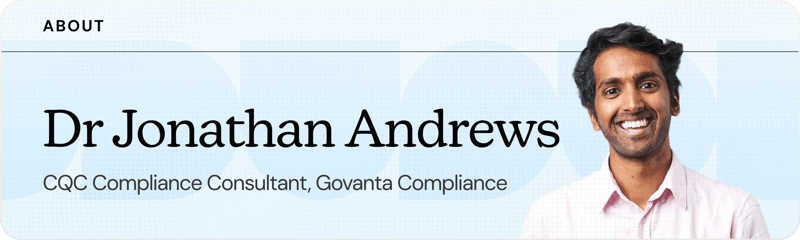
Dr Jonathan Andrews is a Medical Director and practising doctor working across both the NHS and private healthcare. Jonathan also leads Govanta Compliance, a CQC consultancy dedicated to demystifying the inspection process and helping practices achieve successful outcomes. He advises start-ups and scale-ups and delivers educational services across a broad range of topics.


.webp?width=380&height=201&name=Regular%20CQC%20audits%20(1).webp)
-1.svg)
.webp?width=380&height=201&name=Building%20a%20culture%20(2).webp)