


One of the enduring frustrations of general practice is what can happen after a referral leaves your desk. You’ve assessed the patient, explained the plan and sent them to the right specialist. Then, for a period of time, you can lose sight of what’s happening next.
A clinic letter may come back eventually. But in between, an investigation might have been ordered, a result might be pending, medication might have been started or stopped or a follow-up could have been arranged. Unless that information finds its way back to you, it becomes increasingly difficult to know where the patient is in their journey until they return and tell you themselves.
That’s always been inconvenient. But as healthcare becomes more multidisciplinary, and patient pathways involve more services, tests and clinicians, I think it’s becoming something more critical: a question of clinical confidence, governance and patient safety.
Clinical responsibility continues after the referral
A referral is a handover, yes – but it’s not an abdication of responsibility. As a GP, my responsibility to that patient doesn’t then disappear because I’ve pressed send on a referral. I still need to understand whether the plan we agreed is progressing and whether anything has changed that should affect their ongoing care.
That might sound obvious, but our systems don’t always make that easy. Historically, once a patient moved into specialist care, the GP could be left waiting for correspondence. In private healthcare, where pathways move quickly and involve several different services, the same problem can appear in a different form: lots of activity is happening, but no single person has a clear view of the whole journey.
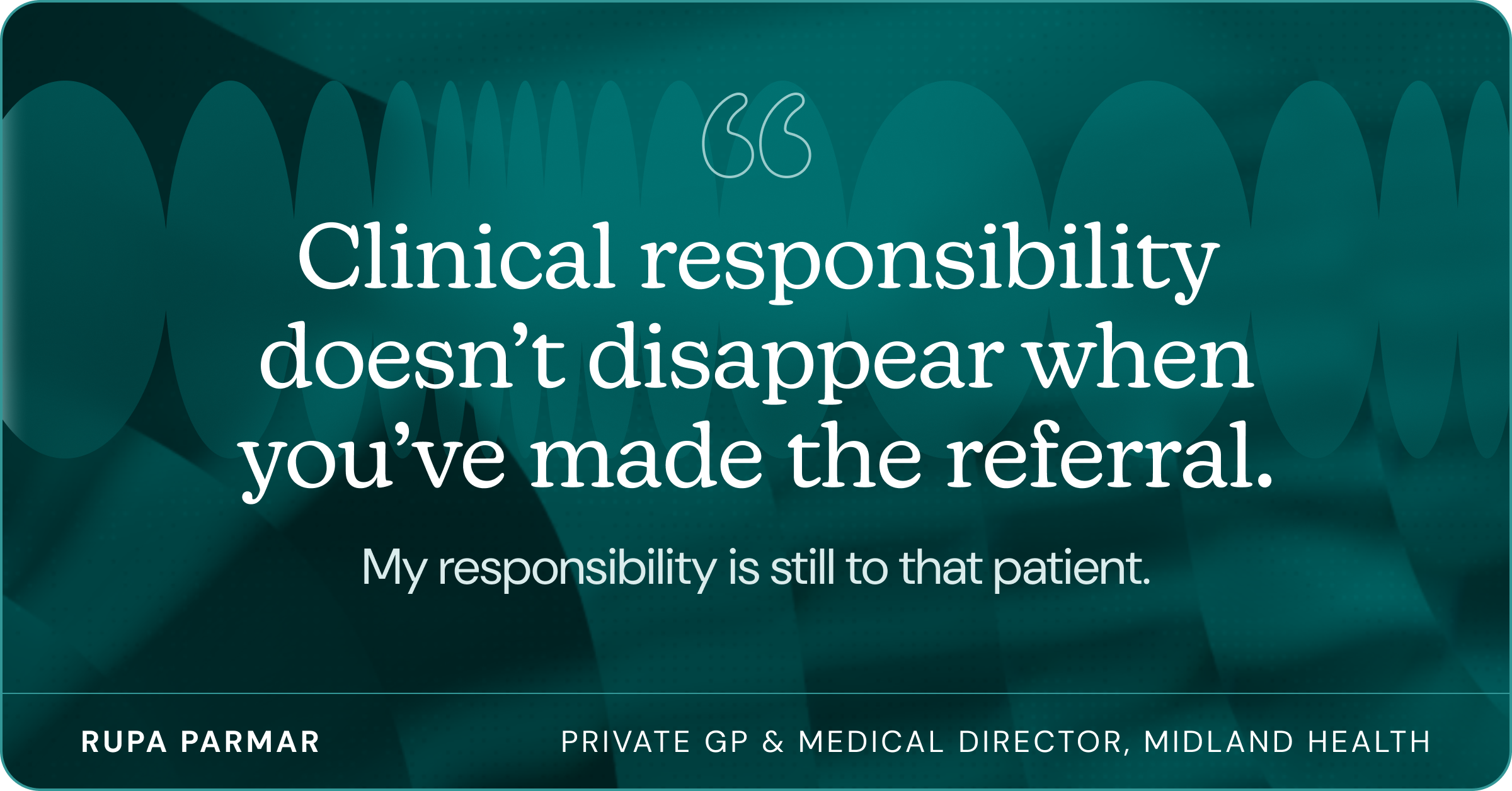
“Clinical responsibility doesn’t disappear when you’ve made the referral. My responsibility is still to that patient.”
For me, the important questions are very practical. Has the investigation actually happened? If it has, was anything abnormal? Did the patient attend every part of the pathway? Was medication started or stopped? Who is responsible for the next follow-up? If nobody can answer those questions easily, ambiguity starts to build around ownership of care.
Visibility changes the clinical conversation
When I can see what’s happened downstream, I can make better decisions when the patient comes back to me. I know which tests have been completed, which results are available, what the specialist concluded and what still needs to happen. I am not reconstructing the story from memory or from what the patient has managed to retain.
That matters because healthcare is complicated at the best of times. At their first appointment, a patient might hear a long list of next steps: perhaps a hearing test before an ENT appointment, or imaging before a cardiology review. So it’s completely understandable if they don’t quite remember every detail. As such, if one element of that care doesn’t happen, the patient likely won’t anything is missing until the delay appears later in the pathway.
A connected view makes that easier to spot. It reassures the clinician that care is progressing as intended, and it also reassures the patient that somebody is holding the whole picture rather than leaving them to chase each part themselves.
The patient shouldn’t have to be the integration layer
Patients already experience enough friction: waiting for appointments, waiting for results, repeating the same information and not knowing who to contact. When visibility is poor, the patient often becomes the person carrying information from one part of the system to another. They ring the GP after a scan, ring the clinic to ask whether the result has arrived, then explain the story again to the next professional.
Administrative teams can end up playing the same role. A patient calls for an update and the team has to check different systems or chase another clinic for what’s happened. The people become the intermediary because the pathway itself is not giving them a reliable answer.
Every manual handoff becomes another place where context can be delayed, misunderstood or missed. And when care is complex, reducing that ambiguity really matters.
Joined-up care needs more than a shared record
Of course, visibility alone does not create good care. Technology can show us the information, but it can’t replace clear clinical responsibility or communication between professionals. In multidisciplinary care especially, we still need defined pathways, clear ownership and teams that talk to one another.
But good tech can make that collaboration far easier. If everyone can see the relevant information, understand what has happened and know what comes next, clinicians can spend less time reconstructing the journey and more time making decisions within it.
For a GP, that means a referral stops being a blind spot. For the patient, they don’t have to keep retelling their story or wondering whether anybody has joined the dots.
Safer care comes from fewer unknowns
We often talk about connected healthcare in terms of convenience or speed. And of course those things matter, but from a Medical Director’s perspective, I think the stronger case is about reducing uncertainty.
The safer pathway is the one where we can see what was supposed to happen, whether it did happen, what the outcome was and who now owns the next step. That creates a clearer chain of responsibility and makes it easier to identify a problem before it becomes a detrimental gap in care.
Patients should be able to move between clinicians without disappearing between systems. And clinicians should be able to refer with confidence that, even when another team takes over the next part of the journey, the patient has not vanished from view.
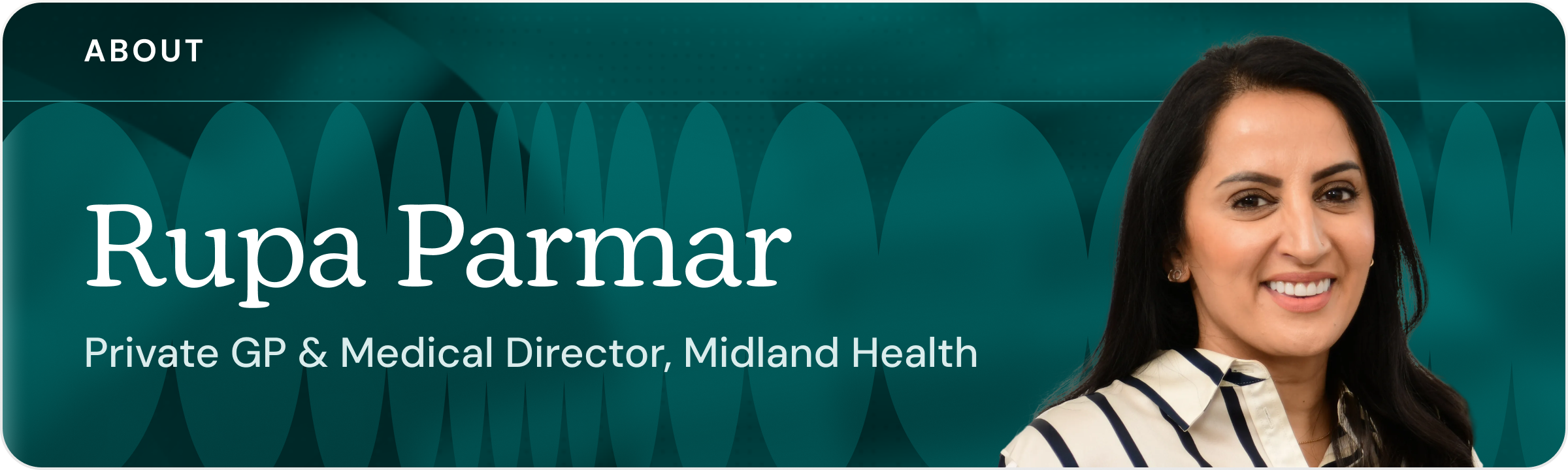
Dr Rupa Parmar is the Founder, CEO and Medical Director of Midland Health, an independent healthcare organisation providing high-quality, patient-centred care across a wide range of medical and surgical specialties. Under her leadership, Midland Health has grown from a GP and diagnostics provider into a multidisciplinary healthcare organisation offering GP services, diagnostics and consultant-led care.
The organisation has developed coordinated pathways around patients’ health needs, bringing different clinicians and services together so patients have a clearer route from assessment through to diagnosis, treatment and follow-up.
As a GP with 20 years’ experience, Dr Parmar is passionate about improving access to healthcare. Her expertise spans healthcare strategy, growth, operational leadership, clinical governance, service redesign and patient experience.