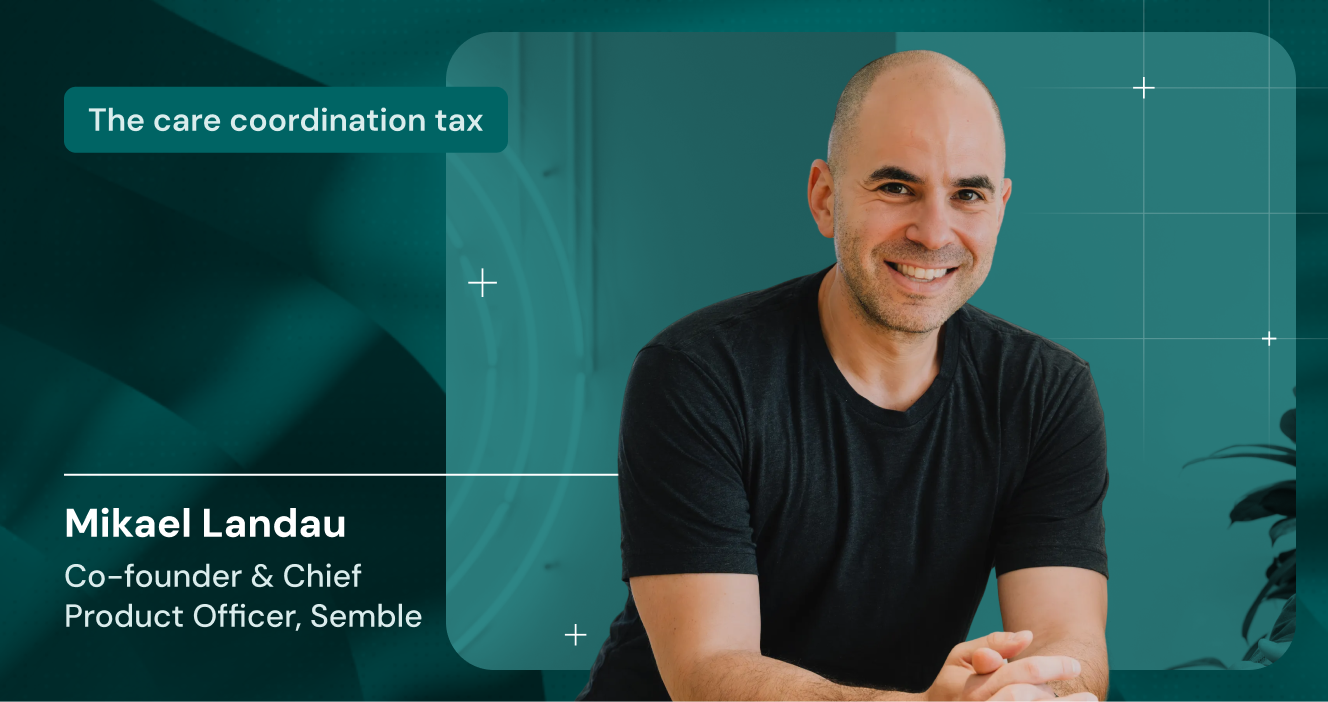


When Christoph and I started Semble, we had both experienced how frustrating it could be to be a patient. Making an appointment was difficult: you carried reams of paper from one doctor to another, called the clinic to chase results and filled in the same forms over again, because nobody knew what had already been collected. You were often the person responsible for making sure information reached the right place.
These were ordinary experiences, a familiar burden to millions of people. We thought technology should be able to make them better.
Tasks are faster, but patients and staff are still feeling the strain
Much has improved since then. Patients can book online. Information can move digitally. Automation takes repetitive work from admin team and AI scribes help clinicians spend less time documenting consultations.
In our recent survey of leaders of UK private healthcare organisations, 90% said the patient journey had become faster over the past two years. Yet 92% said their administrative teams were at full stretch.
Those two findings capture something I think we need to pay more attention to: individual tasks can get faster while the work of connecting them still falls to people, whether that’s the patient or the team looking after them.
I challenge anyone to find a patient who is delighted that a transcript was produced faster or that an invoice was generated automatically. Patients experience a journey made of many tasks, but what they feel is how well those tasks connect, from handoffs between teams to being asked for the same information twice. That is where I believe the next big improvement needs to happen.
Each step can work, but someone still has to connect them
Consider a patient who calls a clinic to make an appointment. The secretary asks some questions and records the answers. The booking then triggers an automated questionnaire.
That automation is useful. It saves someone remembering to send the form, and it’s exactly the sort of improvement we have worked hard to make possible. But the questionnaire may ask questions the patient has already answered. The secretary then has two sets of information to bring together. If the answers differ, someone must work out why. In some setups, the questionnaire can even create a second patient record that needs resolving.
The booking has worked. The questionnaire has worked. Yet the patient has repeated themselves and the secretary has more work to do.
A better system would know what had already been collected, ask for what was still needed and flag conflicting answers for review. It would understand the relationship between those steps. That is care orchestration.

Leaders want connection, and intent-driven AI the best way to deliver it
When we asked which single change would most improve pathway management, 66% of leaders chose better integration, automated handoffs or better visibility of where each patient is. Just 23% chose more AI tools for individual tasks.
That tells me there’s a considerable appetite for technology that helps the pieces work together. I believe intent-driven AI can play a part in satisfying it.
Some of this change can be achieved with straightforward software and well-designed processes. A system doesn’t need AI to recognise that a form has already been completed or to pass information reliably between steps. We should solve those problems with the simplest tech that works.
Task-focused AI is useful, but the risk is proliferation without coordination. A provider can have an excellent scribe, booking engine and patient communication tool and still need someone to make them work together.
This next stage of AI keeps an agreed outcome on track
AI opens up further possibilities where the next action depends on understanding the situation.
I think about its development in three stages: systems that answer questions, systems that carry out tasks and systems that work towards an agreed goal.
The difference between the last two matters. "Send this patient a questionnaire" is a task. "Make sure the information needed for this appointment is ready" is a goal. Achieving that goal requires knowing what information is already available, what is missing, whether the patient has responded and when someone needs to intervene.
That’s intent-driven AI: a system that keeps track of whether an agreed next step actually happens, understands what is missing and involves a person when judgement is needed.
It requires much more than a capable model. The system needs context about the patient and their place in the pathway. It needs permission to take particular actions, access to the relevant tools and clear boundaries for involving a person. If two answers conflict, it should bring that discrepancy to someone's attention. It shouldn’t choose whichever answer makes the workflow easier to complete.
Responsibility and clinical judgement remain with people. The opportunity is to reduce how much they must remember, chase and reconcile to keep an agreed plan moving.
Care orchestration helps built-in and specialist AI work together
This also shapes how I think about the relationship between AI and the electronic health record.
Many providers will want useful AI included in their EHR, ready to use without having to assemble a collection of separate products. Others will see enough value in a specialist tool to pay more for a particular capability.
I expect built-in AI to meet many needs, while specialist products will offer capabilities that some providers consider worth the additional investment. An open EHR should make both choices possible and help those capabilities work with the rest of the patient journey.
That’s how we think about Semble's role. Our APIs and integrations also provide a foundation for connecting tools and workflows. Our ambition is to build on that foundation so systems can do more of the work of keeping an agreed pathway on track, within the boundaries people set.
Growth adds handoffs, and the test stays with the patient
As providers grow, the number of handoffs can grow with them: between sites, teams, clinicians and organisations. We should be asking how much of that complexity our software helps manage, and how much it passes on to staff and patients.
For me, the test remains close to the reason we started Semble. Does the patient have to tell their story again? Does someone have to chase information that should already be there? Does a secretary have to remember to check whether the next step happened?
Our report, The Care Coordination Tax, explores the cost of that work. Reducing it would give healthcare teams more room to care for people and make being a patient less hard work.
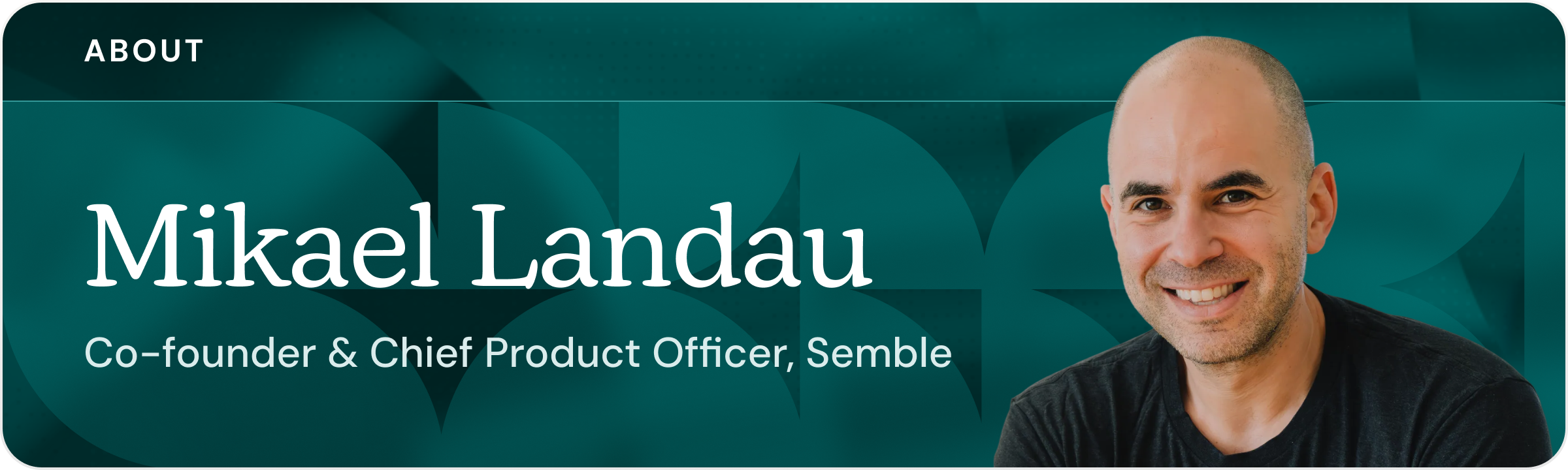
Mikael co-created Semble with a simple conviction: healthcare professionals deserved better tools and patients deserved better experiences.
As Semble’s CPO, Mikael brings a rare end-to-end view of the business, from engineering foundations to product strategy, giving him unique oversight of how Semble's platform is built and where it's headed.
Today, Semble supports over 18,000 healthcare professionals across more than 80 specialities, helping improve the care experience for over 11 million patients.