





Under Right to Choose, patients in England can decide who treats them when their GP makes a referral, including for many ADHD and autism services. They can choose an NHS service or an independent organisation, and the NHS pays for the treatment. But a private provider can only take part once it has been accredited by an integrated care board (ICB).
At Lighthouse Pathways we provide private neurodevelopmental assessments. We’ve been through the accreditation process in 2026 and, not surprisingly, there’s more to it than completing an application form.
What does the accreditation process usually involve?
Each ICB sets its own process for Right to Choose accreditation, so the stages, their order and what they’re called can all vary. Some ICBs handle accreditation through a commissioning support unit (CSU), an NHS organisation that carries out commissioning work on their behalf. A typical sequence looks something like this:
1. The provider expresses interest or applies to the ICB or its CSU.
2. The ICB may hold a discovery meeting to talk through the service specification, performance indicators and pricing.
3. The ICB assesses the provider against core criteria, such as registration with the Care Quality Commission (CQC) and the ability to meet the terms of the NHS Standard Contract.
4. The provider goes through formal accreditation, which may be run by the CSU.
5. If the application is successful, the ICB issues an NHS Standard Contract. Mobilisation, when the provider gets ready to take referrals, follows.
The detail only became clear inside the portal
We didn’t have a formal discovery meeting. Our contact with the ICB was by email, followed by our application through the Atamis procurement portal. The published documents set out the process and the main requirements; it seems that some ICBs rely on these while others choose to hold a discovery meeting.
Emails with the ICB gave us the broad requirements, but we only saw the detailed questions once we started working through the application in the portal. They covered service delivery, CQC registration, clinical governance, safeguarding, workforce competence, information governance and the scope of our pathway.
You can message the ICB through the portal or by email, and it’s worth putting specific questions in writing so you have a record of the answer. Replies took us a week or two, so build that into your plans.
What should you have ready before you start your Right to Choose application?
Start by assembling the documents you need from your evidence library. (Find out more about this in my previous article, Getting Right to Choose-ready: what commissioners actually want to see.)
Check the submission instructions carefully and register on the portal the ICB specifies as early as you can. Registration, finding the opportunity and understanding how the portal is structured all take time.
Then read the notice itself. We found it helpful to start with a few basic questions:
- What type of process is it: a competitive tender, an accreditation opportunity, a framework or a market engagement exercise?
- Is it open to new providers?
- Which services, age groups and areas does it cover?
- Do you need a CQC-registered location in the area?
- Is it for assessment only, or the full treatment pathway?
- What volumes, prices and mobilisation dates apply?
- Are there thresholds for experience or financial standing?
- How and where must you submit your response?
Read the appendices as closely as the main notice, because it’s easy to miss mandatory pass-or-fail criteria there. Careful scrutiny can save you from future frustration and wasted time.
Threshold conditions are pass or fail
A strong clinical model won’t override a mandatory eligibility requirement. Depending on the opportunity, threshold conditions can include CQC registration, location, pathway scope, financial standing and a track record of delivering the service.
Two of these need particular attention, because there are generally no quick and easy fixes.
Firstly, location. In our experience, the ICB required a CQC-registered location in its area. For some opportunities, this has to be in place before your application can go ahead. Fortunately for us, the ICB’s timescale gave us room to work out how to meet it.
Secondly, financial standing. We found the financial threshold set out in the portal, so we could check whether we met it before going any further. Some ICBs also publish how they assess it. Humber and North Yorkshire ICB, for example, reviews the applicant’s accounts and scores four financial ratios, giving the most weight to the current ratio (current assets against current liabilities, 50%) and gearing (total debts against total assets, 30%). Anyone who doesn’t reach the pass mark is normally turned down at that first stage, and an unsuccessful applicant has to wait 12 months before trying again.
How long does accreditation take?
Plan for several months from first preparation to a signed contract, to cover readiness, application, clarification and contracting.
We began formally tracking our process in July 2026. Two months in, we had reviewed the service specification, confirmed our regulatory position, gathered supporting evidence and responded to detailed requirements through Atamis and in other formats the ICB asked for.
What I underestimated was the time it takes to interpret each commissioner’s specific requirements and confirm that you meet every threshold condition.
What are the common misconceptions about Right to Choose accreditation?
An expression of interest isn’t an application. Don’t assume an email exchange with an ICB counts as a formal submission either. Responding to market engagement doesn’t mean a contract has been applied for or secured. All required questions and attachments must be completed through the stated procurement system by the deadline.
There’s no one-off national accreditation. Once you hold a qualifying NHS Standard Contract with one ICB, patients across England can choose you for the services that contract covers. Each ICB still has its own local arrangements for onboarding, reporting and operations, though, and meeting the national regulatory and contractual requirements doesn’t automatically mean you meet them.
One final tip: if an opportunity has a deadline, plan backwards from it. Register on the portal as soon as you decide to apply, so you can see the detailed questions early. Then send any queries to the ICB straight away, so you have the answers in front of you before you complete the application.
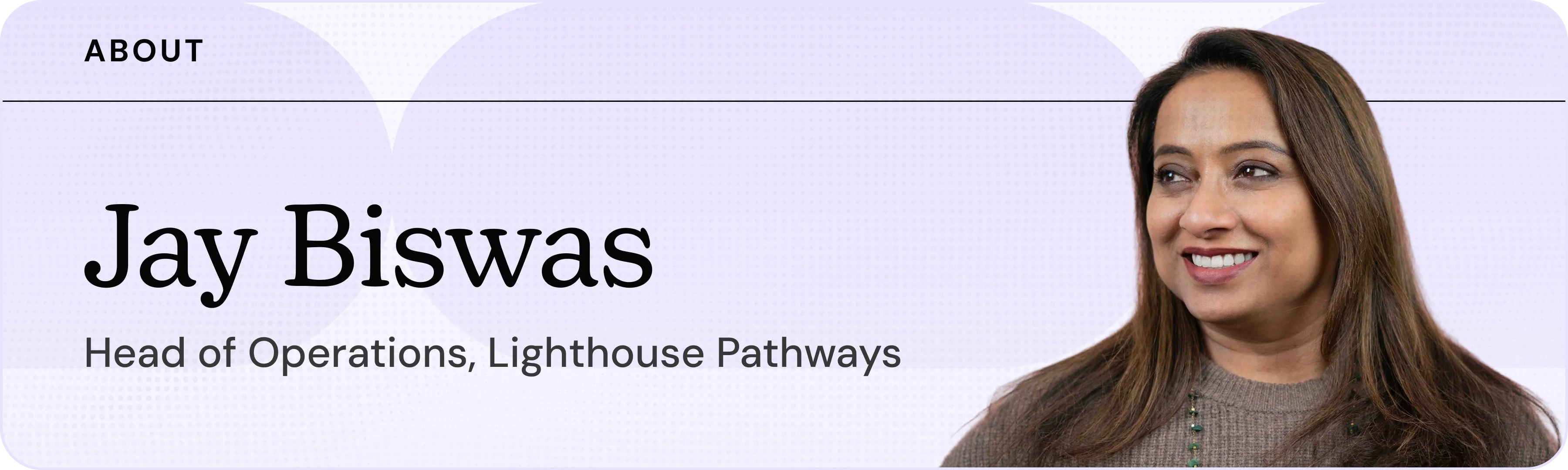
Jay is a strategic healthcare leader, driving digital transformation and scalable service models across NHS, private and digital sectors.
She is currently leading the development and launch of a new specialist neurodevelopmental telemedicine service at Lighthouse Pathways, operating across both private and NHS pathways in the UK. The team offer online diagnostic assessments and support for ADHD and autism for adults and children.


