





Being CQC registered is only useful for Right to Choose providers if your registration actually covers the service you want to deliver.
Before approaching an Integrated Care Board (ICB), check five things: your statement of purpose, regulated activities, patient groups, registered locations and latest CQC rating. If you’re moving from private work into NHS-funded care, you’ll also need to understand the wider NHS requirements that sit outside CQC.
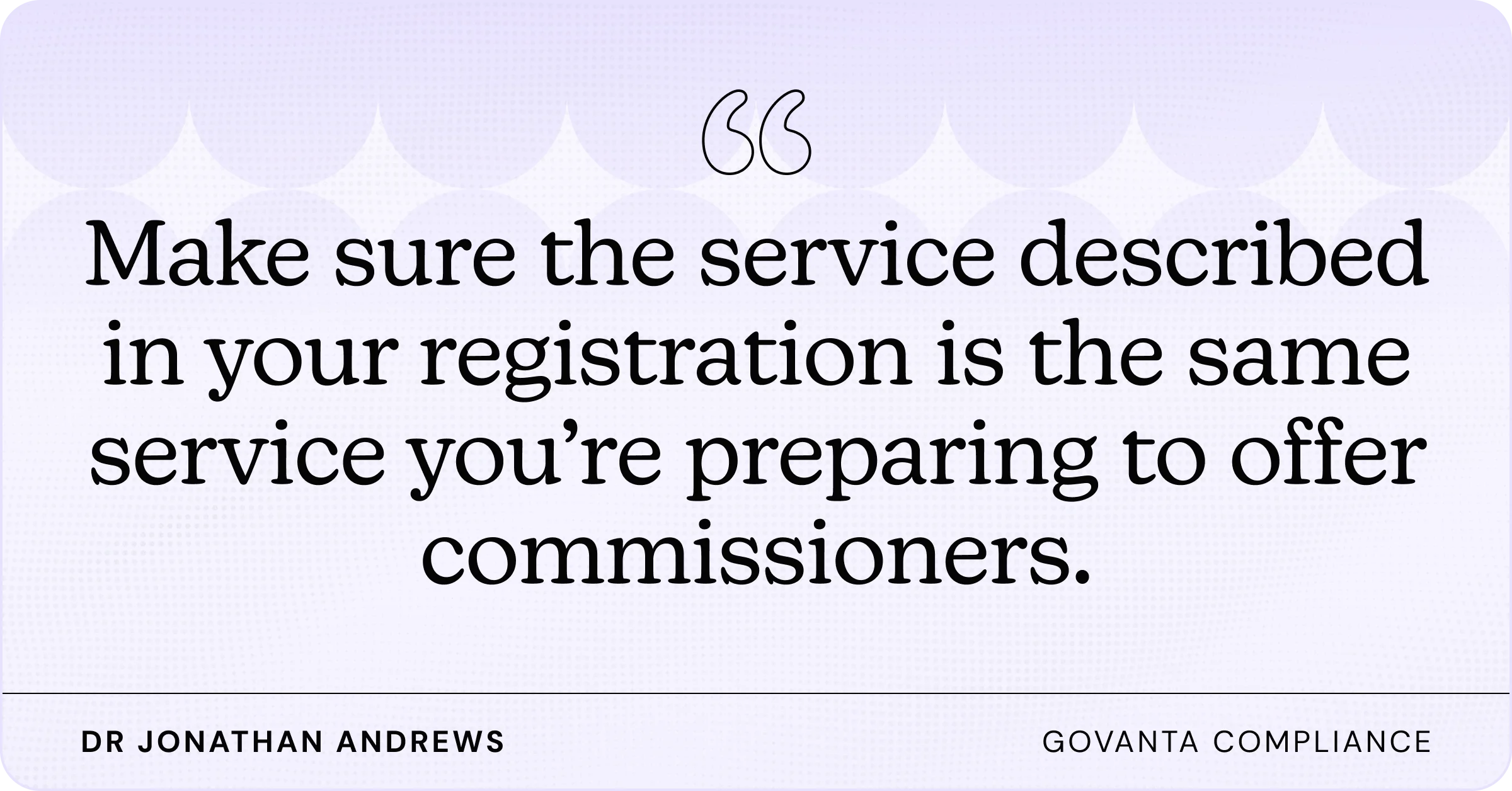
The starting point is making sure the service described in your registration is the same service you’re preparing to offer commissioners.
What do ICBs look for in your CQC registration?
Start with your statement of purpose. It sets out what your service does, who it’s for and the regulated activities you provide, so it gives commissioners a useful way to check whether your registration fits the service you’re applying to deliver.
If you’ve added a treatment, started working with a different patient or age group or changed where you deliver care, check that the statement of purpose still accurately describes the service.
From there, an ICB can look at the rest of your registration to see whether everything lines up, including:
- The regulated activities you’re registered for
- The patient and age groups covered
- Your registered locations
- Your latest CQC rating
- Your registered manager and nominated individual arrangements
It’s worth having the evidence behind the registration organised too. Clinical governance records, audits, incident logs, patient feedback and complaints records can all help show how the service is governed day to day.
Complaints are a good example. Having complaints isn’t necessarily a sign of poor quality; what matters is how they’re recorded, investigated and acted on. If a commissioner wants evidence of good governance, being able to show how you’ve responded to concerns and what changed as a result is much more useful than simply saying you receive very few complaints.
Does your CQC rating matter?
Yes, although commissioners can look beyond the headline rating to understand what sits behind it. An ‘outstanding’ or ‘good’ rating provides useful independent assurance. An ‘inadequate’ rating is clearly more serious, but a ‘requires improvement’ rating will need context.
If your latest rating is ‘requires improvement’, be ready to show what led to it, what action you took and what evidence demonstrates that the issue has been resolved or is being managed. An unresolved safeguarding concern, for example, is very different from a historic workforce issue that has since been addressed.
Some providers won’t have a rating yet because they haven’t been inspected. That doesn’t automatically indicate a problem, although it gives a commissioner less external evidence to draw on. In that situation, your own governance evidence becomes particularly useful.
Do diagnosis-only ADHD and autism services need CQC registration?
CQC updated its guidance in March 2026 to clarify that providers offering only ADHD or autism diagnosis, with no treatment, do not currently need to register with CQC for those activities.
That distinction is important for Right to Choose because diagnosis can be only one part of the pathway an ICB wants a provider to deliver. If the Right to Choose service moves into treatment, including areas such as medication initiation or titration, regulated activities such as Treatment of Disease, Disorder or Injury (TDDI) can come into scope.
This is an area where I’ve seen considerable interest from prospective providers. The important thing is to look at the whole commissioned pathway before deciding what registration you need, rather than looking at the assessment element on its own.
The regulatory position is also changing. The independent review into mental health, ADHD and autism, led by Professor Peter Fonagy and published in October 2026, found that independent providers now carry out more than half of NHS-funded ADHD assessments. It recommended that all ADHD and autism diagnostic assessments become CQC-regulated, and that direct-to-public advertising of NHS-funded assessments be banned. NHS England will also consult on a national set of prices for NHS-funded ADHD and autism services. For Right to Choose providers, those last two points could matter as much as registration itself.
In October 2026, CQC announced that the Department of Health and Social Care had asked it to regulate all services providing autism and ADHD diagnostic assessments once new regulations are in place. Current legislation doesn’t yet allow CQC to regulate services offering diagnosis without treatment.
For providers, that makes the quality of the assessment pathway worth considering even where CQC registration isn’t currently required. Commissioners can still expect to see robust clinical governance, appropriately qualified clinicians and a clear assessment process supported by evidence and quality assurance.
No date has been set for the new regulations yet, so if you're a diagnosis-only provider, it makes sense to build your governance now as if you were already registered.
Does your existing CQC registration cover your Right to Choose service?
If you already deliver private healthcare and are registered with CQC, you won’t necessarily need to start again, but you do need to check that the registration you already have covers what you now want to offer.
For Right to Choose ADHD treatment pathways, for example, Treatment of Disease, Disorder or Injury (TDDI) can be one of the relevant regulated activities. Having TDDI on your registration doesn’t specify every individual condition you can treat, so the detail in your statement of purpose and the service sitting behind it still matters.
I’d work backwards from the service you intend to deliver. Check that you have the right clinicians, protocols, policies, medicines arrangements, insurance and operational processes in place, then make sure your CQC documentation reflects them.
I’ve worked with one provider where the eventual statement-of-purpose amendment was only a couple of lines and was accepted quickly. The preparation took much longer because we first had to update the clinical protocols, staffing, formulary, policies, procedures and insurance.
That’s why I wouldn’t treat amending the statement of purpose as the whole job. You should be able to show the service behind those few lines is ready too.
Do you need a CQC-registered location in every ICB area?
Not necessarily. The requirement depends on the service and the particular opportunity you’re applying for.
A fully remote service has different considerations from one delivering face-to-face or hybrid care. Some ICB opportunities require providers to have a CQC-registered location within a particular area, and geographic requirements can also apply to where patients are seen.
- Check this before investing heavily in an application. Confirm:
- Whether the service will be remote, hybrid or face to face
- Whether the opportunity requires a registered location in the area
- Whether the locations you intend to use are already covered by your CQC registration
- Whether those locations are suitable for the patient group and service
Location requirements can take time to resolve, so finding out after an opportunity has been published can leave you with very little room to act.
Where does CQC end and wider NHS compliance begin?
CQC registration is one part of being ready to deliver NHS-funded care. Moving from private work into Right to Choose can introduce requirements that sit elsewhere in the NHS assurance framework.
Depending on the service, these can include:
- The Data Security and Protection Toolkit (DSPT)
- Clinical safety standards such as DCB0129 and DCB0160
- Information governance
- Incident reporting
- NHS data submissions
- Complaints and feedback processes
A private provider could already have strong clinical governance and a valid CQC registration without having dealt with some of these NHS-specific requirements before.
Keep the two areas clear when you’re preparing your evidence. Your CQC documentation should demonstrate that you’re properly registered for the service, while your wider readiness work needs to cover the additional assurance the NHS expects from its providers.
Before you approach an ICB: check your CQC evidence
Before committing to an opportunity, work through your registration against the service specification and make sure you can evidence each part.
Check your statement of purpose. Does it accurately describe the service, patient groups and model of care you want to deliver?
Confirm your regulated activities. Make sure they cover the pathway included in the opportunity.
Check your patient groups. Confirm that the relevant ages and service-user groups are covered.
Review your locations. Check whether the opportunity requires a registered location and whether your existing registration covers it.
Check your registered people. Make sure your registered manager and nominated individual arrangements are current.
Review your latest CQC position. If there are outstanding actions or a requires improvement rating, have evidence showing what you’ve done since.
Organise your governance evidence. Keep audits, incidents, complaints, feedback and other assurance records easy to find.
Check the service behind the paperwork. Make sure staffing, protocols, insurance and other operational arrangements reflect what your registration says.
Map the wider NHS requirements. Identify the digital, data, information governance and clinical-safety standards you’ll need to meet alongside CQC.
Check the current rules. If you’re offering diagnosis-only ADHD or autism services, review the latest CQC guidance before relying on the current registration position.
When those pieces line up, you’re in a much better position to show a commissioner that your registration reflects the service you’re asking them to approve.
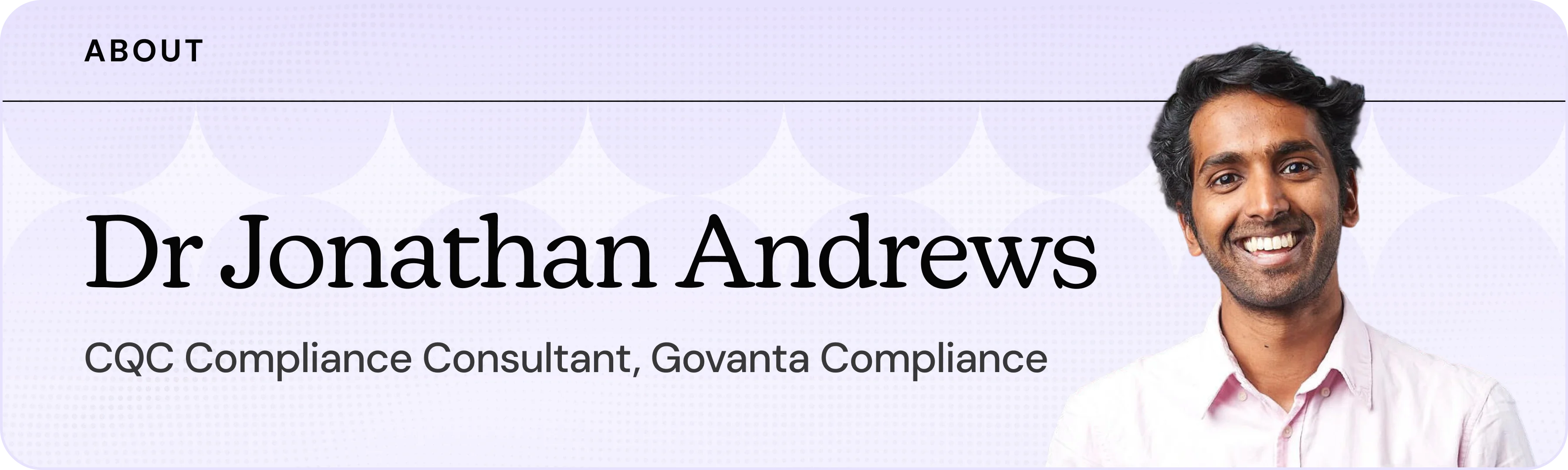
Dr Jonathan Andrews is a Medical Director and practising doctor working across both the NHS and private healthcare. In addition, Jonathan also leads Govanta Compliance, a CQC consultancy dedicated to demystifying the inspection process and helping practices achieve successful outcomes. He advises start-ups and scale-ups and delivers educational services across a broad range of topics.


