
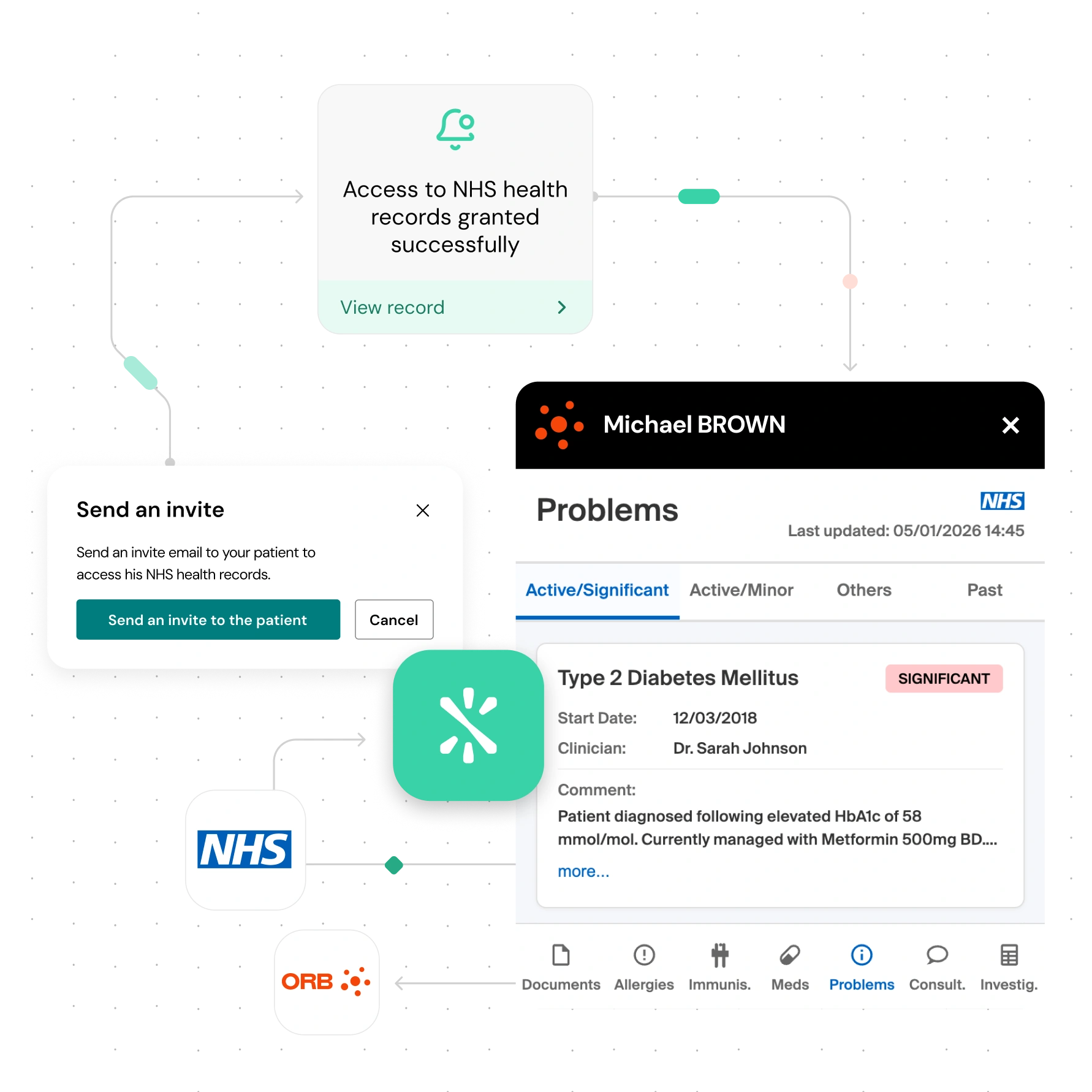
Don’t let access to NHS records delay treatment. Semble is the first practice management system for private care with NHS GP record access built in, powered by ORB Connect. Let your clinicians treat patients faster with the full patient history from the first appointment.

Private patients pay for speed
When a consultation ends with "we need to write to your GP first" it becomes a follow-up they may not book. Another clinic wins your patients.
Don’t let NHS GP records access delay treatment
Treat ADHD titrations, pre-surgical assessments, chronic diseases and more confidently with instant NHS GP record access. Never turn a private patient away for a lack of medical history access.
Win the patients other clinics lose by being slow
Patients booked into treatment within a week convert at up to 90%*. At four weeks, that drops to around half. Removing the wait for NHS GP records is the fastest way to shorten that timeline.
*Source: ORB

Get up to speed clinically before you see a patient who's already been under NHS care. Build on what your NHS colleagues have already established, read GP notes, specialist letters and referrals on their record.
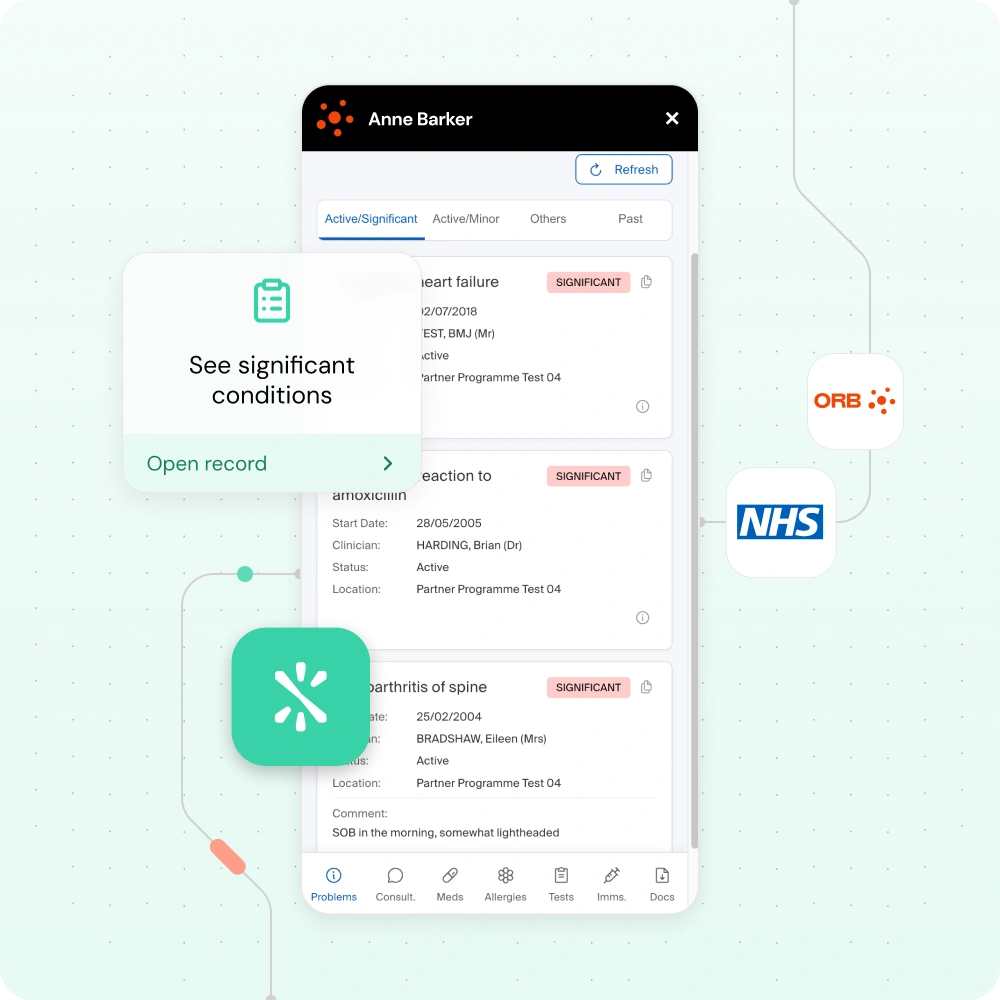
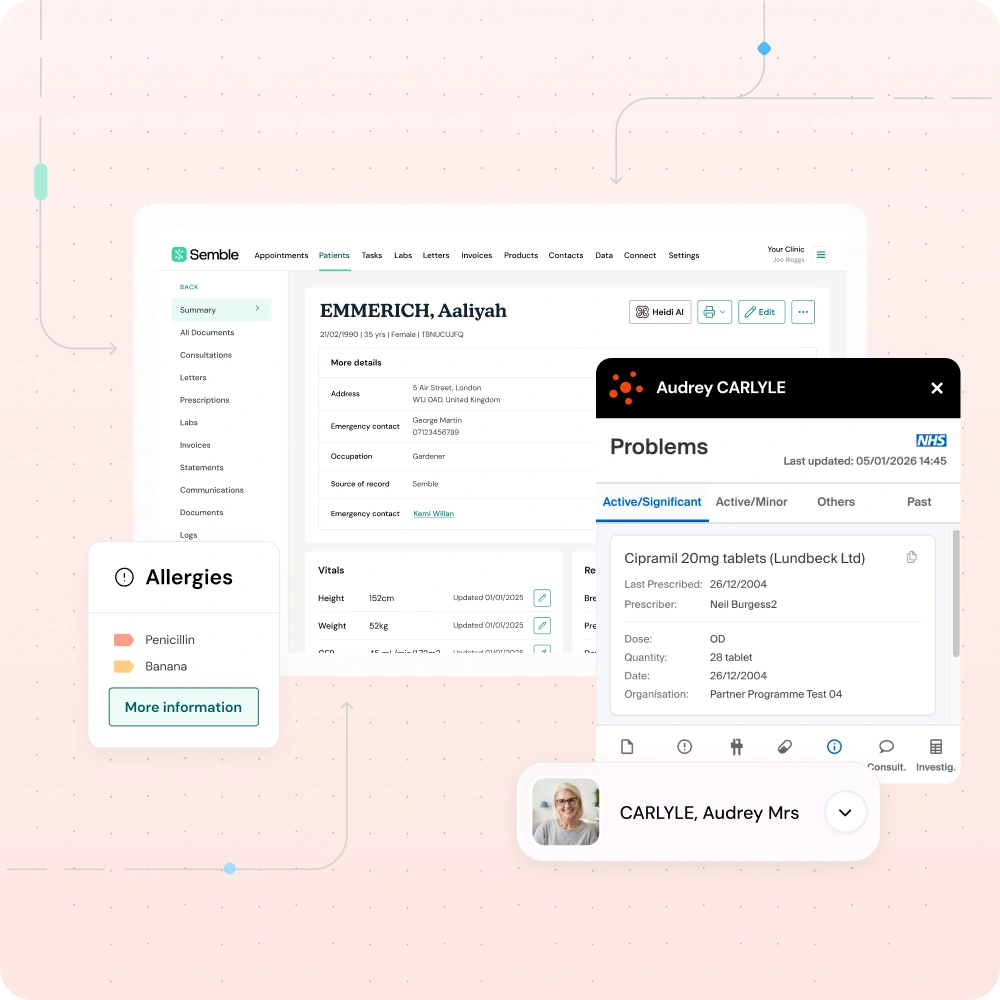
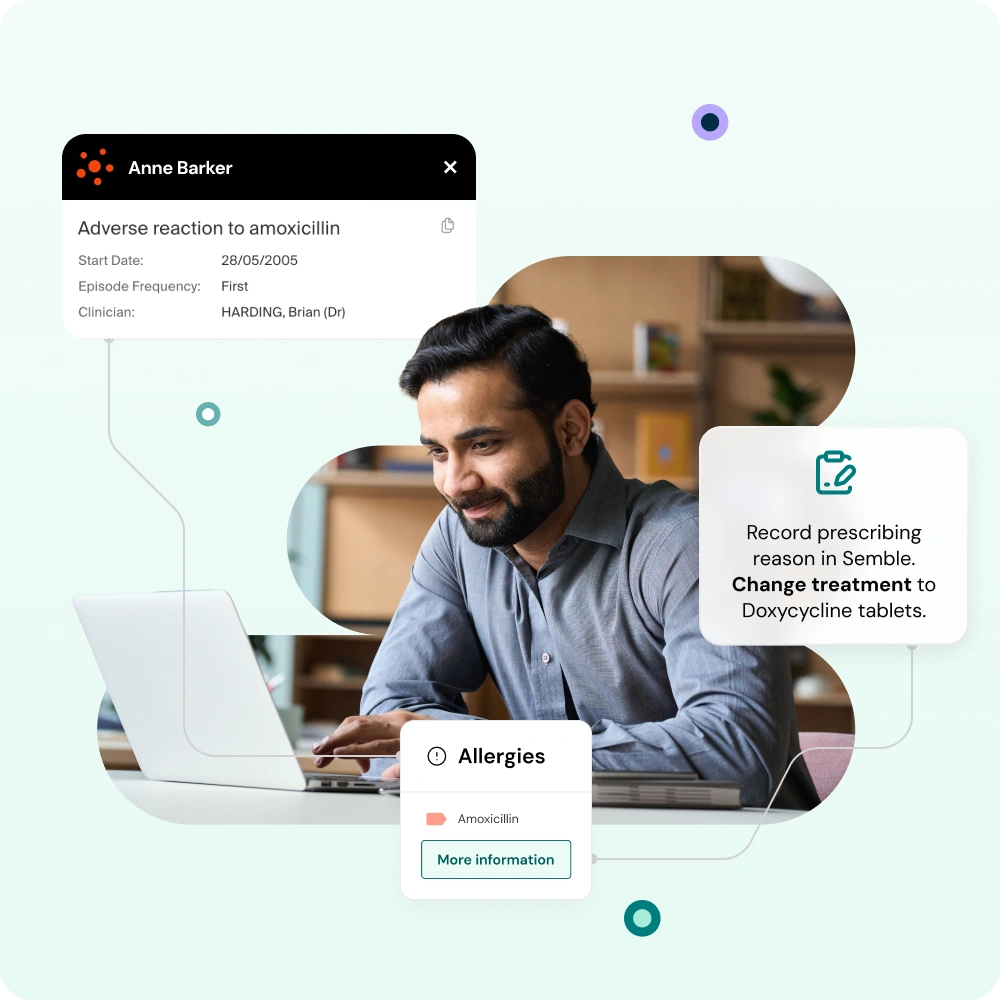
See a patient's full medication and allergy history, based on GP records, not what they half-remember, to prevent interactions and contraindicated prescribing.
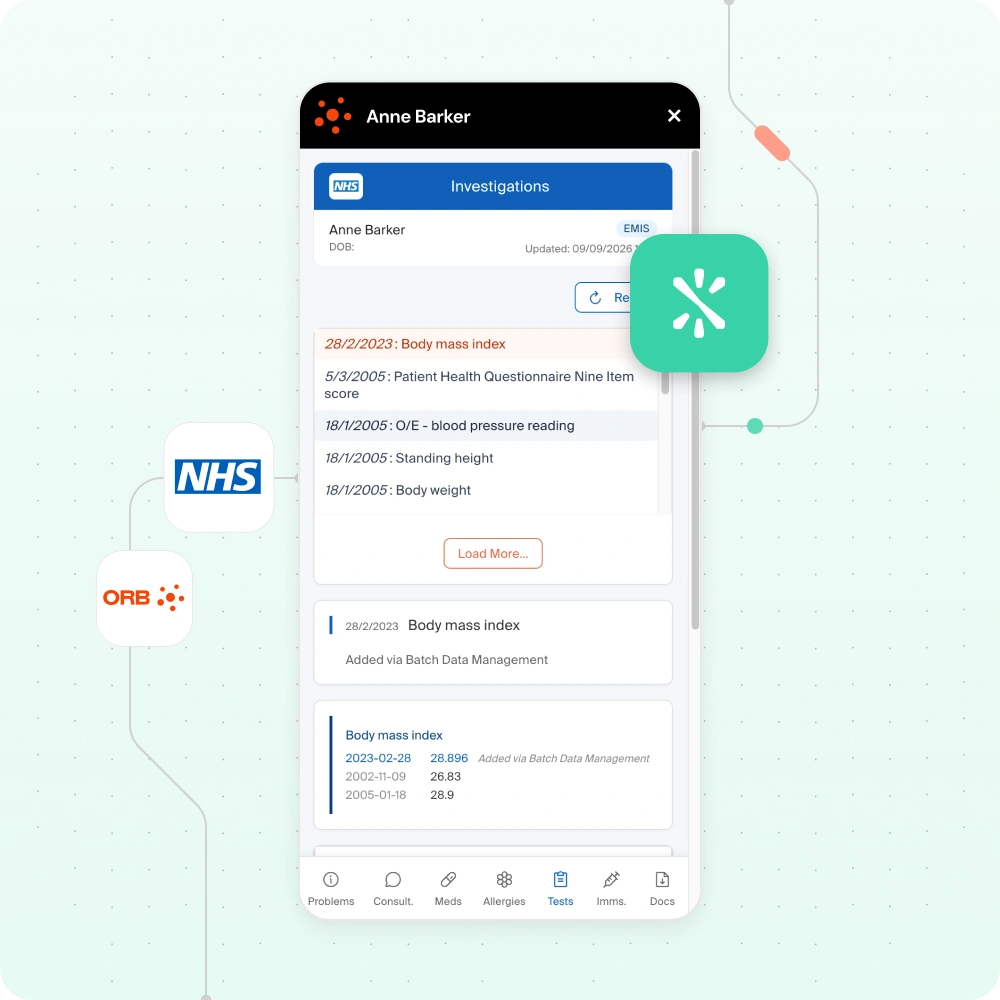
See lab and investigation results over time. Monitor increasing BMI, a rising HbA1c or a declining eGFR and more so you can adjust treatment to how a condition is actually progressing.
Patients shouldn't have to remember every diagnosis, prescription and referral. When their clinician already knows their history, the consultation starts from a different place, which is what keeps them coming back and what makes them recommend your practice.
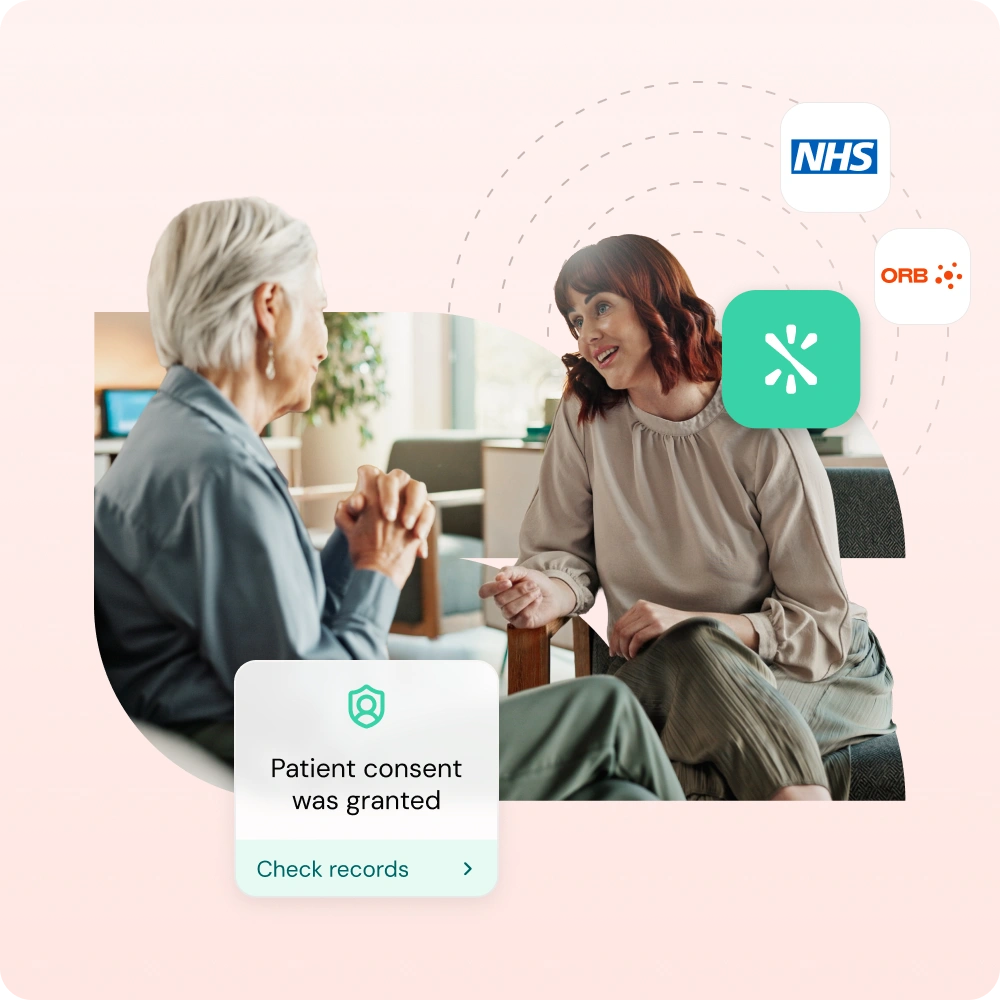
Get auditable clinical governance. Viewing a patient's NHS app on their phone leaves no evidence of the patient history your clinician sees in an appointment. ORB Connect logs every patient record view, so you can evidence exactly how a treatment decision was reached.



.png)
"ORB Connect delivers massive time savings every day. I estimate it saves 10–20 minutes per patient, particularly for complex cases and weight-loss consultations. I can’t imagine running my private practice without it."
The ORB Connect integration will be available in October, look out for announcements in Semble when it's live.
You will need manager permissions to turn on ORB Connect from the settings >> integrations tab in Semble. This will turn on the integration for every clinician in your practice. Each clinician then accepts ORB's terms and conditions the first time they open the record viewer.
There are two ways. We recommend activating the pre-built email template in your communication settings. Before activating, check the automated emails are linked to the right product and appointment types from your Semble auto-email reminder settings to ensure it’s automatically sent out before their appointment.
If a patient's link expires or they didn't get round to it before their appointment, you can also send an email invite manually from their patient record.
After receiving the email, the patient will be invited to verify their identity through NHS Login to share their GP record with you.
We don't offer a bulk invite. Inviting everyone at once creates a pile of consented records a clinician is then expected to have read before each appointment which isn't realistic. Attaching the invite to appointment types means consent arrives in step with who you're actually seeing. Most practices start by attaching it to all upcoming appointments to build coverage.
Patients can decline or revoke acess to their records at anytime, it's entirely their choice. You can carry on as you normally would, whether that's a pre-appointment questionnaire or asking during the appointment.
Yes your patients will need to provide consent per practice. That way, no clinic can see where else the patient has shared their record.
You can access the following:
A Semble branded patient onboarding page you can share with patients before their appointment, so they know what ORB is and why they're being asked to consent.
Training videos for your clinicians and reception team, so they're confident with the tool and can answer patient questions.
Problem lists, GP consultation notes, medications, allergies, immunisations, investigation and lab results, and hospital and specialist letters for a consented patient, inside the Semble patient record.
Entries from before 2020 may not appear initially, but the NHS GP practice can quickly release access to the full record when the patient requests it.
No. The NHS GP-record is for clinicians with a clinical need.
The ORB Connect and Semble integration is read only, nothing is written back to the NHS. We don't recommend routinely copying NHS-record content into your Semble notes, as there are compliance considerations around importing NHS data into a private record.
Not yet. The current ORB Connect to Semble integration is for adults only. ORB Connect supports 16- and 17-year-olds directly, and 13-16 via a parent's account.
ORB Connect only works with patients who are living in England. The NHS infrastructure that makes this possible isn't yet available across the rest of the UK, Currently Wales is coming next (12-18 months), Scotland and Northern Ireland after that.
With the time saved from chasing GP records and faster follow-up bookings, even one extra converted appointment more than covers the cost of £20 + VAT per clinician, per month (billed monthly with your Semble subscription). Every Semble customer gets Orb Connect at 60% off the direct price of £50 per clinician per month.
The minimum term aligns to your existing Semble contract. To cancel your contract, please contact a member of our support team.
Not for private providers today. Access is contractually anticipated but has no confirmed date, no eligibility list and would require the same NHS security clearances (up to two years) that most private clinics can't obtain. ORB works now, through patient consent, with none of that infrastructure.
You can but you'll lose time and money doing it. Paper records are outdated the moment they're printed, meaning you can’t treat confidently based on real-time clinical information. Meanwhile, private patients don't want to wait and delay treatment, so they book elsewhere.
The NHS app is designed for patients, not clinicians. It's fiddly to read, hard to reference in your notes and leaves no record of what you actually saw. If a treatment decision is ever questioned, you've got no auditable record. ORB Connect logs every view so you can evidence exactly what you saw in a patient record that informed your treatment decision.