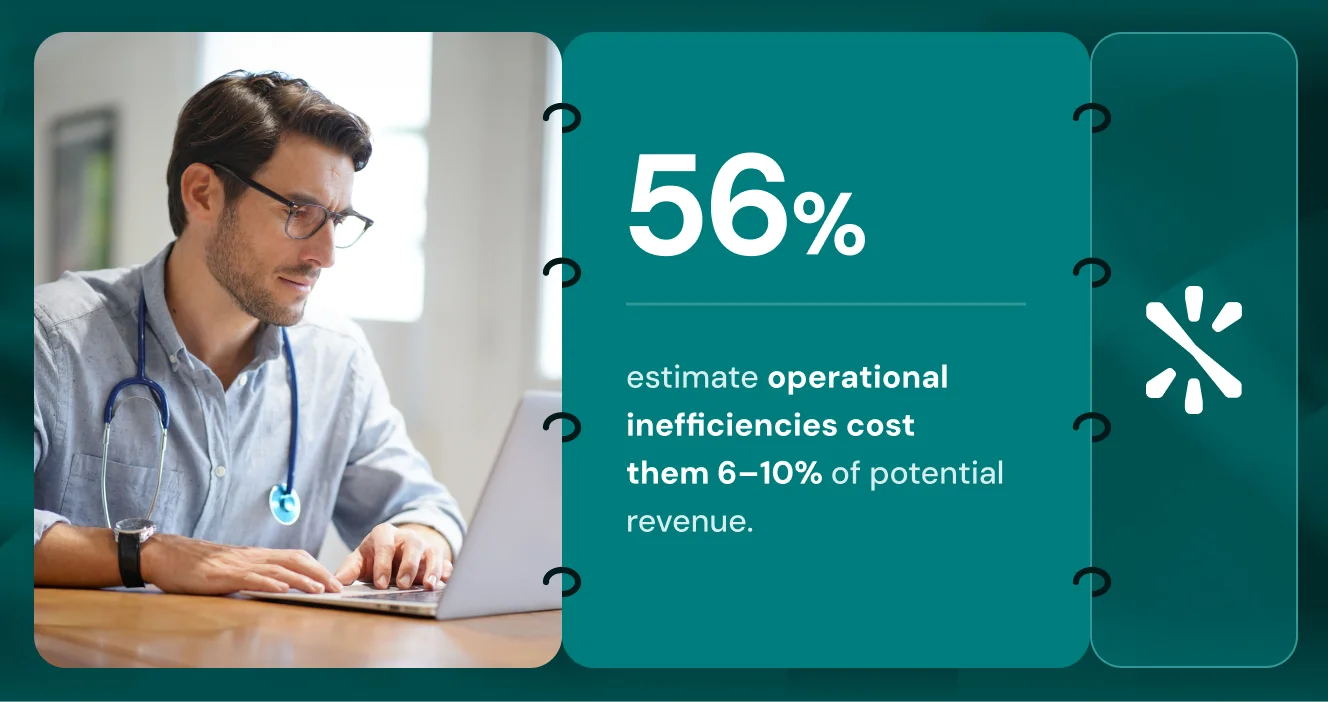


New Semble research indicates more than seven in ten (71%) UK private healthcare leaders estimate that operational inefficiencies cost their organisations between 6-20% of potential revenue. The survey of 250 healthcare leaders found that more than half (56%) estimate losses of 6-10%, while 61% report lost revenue from appointments that go unpaid.
The findings reveal a ‘Care Coordination Tax’: the hidden commercial cost created when healthcare teams have to compensate for gaps between systems, teams and stages of the patient pathway. From unpaid appointments and unused capacity to delayed payments and missed follow ups, these inefficiencies are affecting providers’ bottom lines and their ability to grow.
Revenue slipping through the cracks
The research shows how providers are losing revenue and capacity at multiple points throughout the patient journey. Over half (58%) of healthcare leaders report delayed invoices or claims because information is missing or spread across systems, while 61% say their organisation regularly or occasionally loses appointment capacity because cancellations or missed appointments cannot be filled in time.
More than half (54%) also report patient follow ups or rebookings falling through the cracks, highlighting how fragmented pathways can disrupt continuity of care and create further commercial risks.
Together, these findings show how providers can miss out on revenue and lose value from the resources and capacity they already have, even as they look to expand their services.
.png)
Semble's co-founder and CEO, Christoph Lippuner, commented: “The Care Coordination Tax is easy to overlook because its costs are spread across the business, from appointments that go unfilled and payments that are delayed to time spent managing disconnected processes. Individually, these inefficiencies may seem small, but together they can have a significant impact on providers’ revenue and their ability to grow.
“Growth cannot sustainably mean adding more people to manage more administration. Proper care orchestration offers a better way forward, connecting systems, teams and workflows across the patient journey, so more of that work happens automatically with technology, rather than being held together manually. Providers can then make better use of existing capacity, protect revenue and create the headroom to grow.”
When inefficiency becomes a growth barrier
Beyond the immediate financial impact, operational inefficiencies are also affecting providers’ ability to expand. Some 84% of healthcare leaders say administrative workload is limiting their organisation’s ability to scale services. Meanwhile, 92% report that their administrative teams are already at full stretch or dealing with more work than they can handle.
With teams already stretched, simply adding more administrative resources is unlikely to be a sustainable answer to growing complexity. Reducing the gaps between systems, teams and stages of care can instead help providers protect revenue, make better use of existing capacity and support growth without increasing the coordination burden.
.png)
Dr Rupa Parmar, Medical Director and Founder of multi-site private GP and multidisciplinary clinic, Midland Health, commented: “More patients are choosing to fund their own care and expect responsiveness, transparency and convenience. But patients don't experience healthcare as a series of separate appointments or services. They come to a provider with a health problem and expect a clear, joined-up route to resolving it. As care becomes more multidisciplinary, providers need to ensure patients aren't left navigating different clinicians, tests and follow-ups themselves.”
The full findings are available in Semble’s latest report, The Care Coordination Tax, which examines the commercial and operational impact of fragmented patient pathways on UK private healthcare providers.

.webp)