.webp)


Healthcare data management is one of the most important responsibilities in modern healthcare. Every appointment, prescription, referral, invoice and clinical note creates information that needs to be accurate, accessible and, most importantly, protected.
Because of this, a patient data management system should do more than just store your practice’s records. It should support clinical decisions while protecting confidential information, helping healthcare teams meet legal requirements and safeguarding your organisation from a compliance standpoint. It should also allow your patients to receive fast and connected care by ensuring your clinicians and medical practice teams have access to the right information, and it should achieve this without sacrificing security in the process.
That’s why secure patient data management, from a practice management software provider with the right security certifications, should be central to every Electronic Health Record (EHR) decision. However, not every provider is capable of offering this, and some have a looser approach to security than others. Let’s take a look at the kinds of healthcare data management systems you can trust, and those that might not ensure the level of security your organisation’s data needs and deserves.
Why healthcare data management is now a security priority
Healthcare organisations hold some of the most sensitive personal information there is. Medical histories, prescriptions, test results, mental health notes, payment details and correspondence; all these things need secure and reliable protection.
As healthcare becomes more connected, however, this kind of data tends to move through more systems, which creates greater risk. A patient might book an appointment with your clinic online, attend a consultation, receive a prescription, pay through a platform and receive follow-up communications. Each step improves your patients’ experiences when they work well, but each step also creates a responsibility to manage data safely.
Good healthcare data management means keeping data accurate, available, organised and protected throughout every patient journey. Clinicians need reliable records during consultations, and admin teams need the right details to manage bookings and billing. And of course, patients need to know that their information is secure too.
Security matters because healthcare data is not just useful, but also sensitive and long-lasting. A compromised password, misconfigured database, poorly tested system or unqualified provider of patient data management software can expose information that patients expect to remain confidential.
What happens when patient data is not secure?
When patient data is not protected properly, the risks can put your organisation in jeopardy. Not just for operational or even reputational damages, but for legal and financial repercussions too. Whether it’s a data breach that exposes personal information or weak access controls that allow people to view records that they shouldn’t have access to, the risks affect far more than compliance.
For a UK healthcare provider, the fine for data breaches can reach as high as £17.5 million, or 4% of global turnover. For many providers, this is something that can never be recovered from. That’s why the financial costs of data breaches, which stem from a failure to ensure data security, cannot be ignored.
Healthcare providers have responsibilities under data protection rules. A practice remains responsible for how patient data is managed, even when a third-party platform supports that work. That’s why choosing the right patient data management system provider is critical.
What makes a patient data management system secure?
A secure patient data management system should protect data at every stage, from when it is entered and stored to when it is accessed and shared.
Operationally, that starts with access control. Not every team member needs access to every piece of information. Role-based permissions help make sure people can only see and do what their role requires, while multi-factor authentication adds another layer of protection.
Encryption is also essential. Patient data should be protected while it is stored and while it moves between systems, as this helps reduce the risk of exposure if information is intercepted or if infrastructure is compromised.
There are also audit trails to account for. A strong EHR should record who accessed a record, what changed and when. This creates accountability and helps teams investigate unusual activity quickly.
However, security doesn’t stop at product features. The platform also needs resilient infrastructure, backups, disaster recovery planning, ongoing monitoring and independent penetration testing.
Fortunately, a trustworthy and reliable software provider will be able to tell you how they handle all the above, so make sure you enquire about each of these areas when considering providers for your healthcare data management.
Why security certifications matter
Any software provider can say they take security seriously, but certifications actually prove which ones can be trusted. For example, independent certifications show that a provider has been assessed against recognised standards by an external and unbiased source. For healthcare organisations choosing an EHR or patient data management system, this evidence matters because it gives practices a clear way to compare security claims.
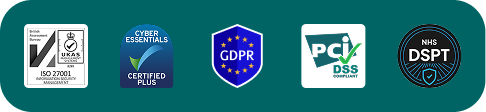
The kinds of security certifications to ask for from a provider include:
- ISO 27001 assesses how an organisation manages security across people, processes and technology.
- Cyber Essentials Plus includes independent technical testing to show that key cyber security controls are in place and working.
- The NHS Data Security and Protection Toolkit (DSPT) is also important for organisations handling health and care data.
These certifications are evidence that a provider has invested in governance, process and accountability. Semble holds ISO 27001, Cyber Essentials Plus and NHS DSPT certifications, with further security documentation available through our Uncompromising Security resources. That transparency helps practices carry out due diligence with more confidence, and that’s not something every provider is willing to (or can) provide.
In short, if a provider doesn’t openly share their security certifications, it’s most likely because they don’t have them. And that’s a huge red flag.
The risk of “vibe coding” in healthcare software
Artificial intelligence is changing how software is built. If used well, it can help teams move faster by automating repetitive work and creating useful tools. In healthcare, AI can also help reduce admin and give clinicians more time with patients. However, it can also create risk when software is built without strong security foundations.
“Vibe coding” is often used to describe rapid, AI-assisted development where products are built quickly through prompts and iteration. That may be useful for prototypes or low-risk tools, but it’s nowhere near sufficient for the security and reliability needed for a finished healthcare platform. That’s why you shouldn’t jump into choosing a provider without ensuring their platform has proven its reliability.
A healthcare application needs secure architecture, tested permissions, careful database configuration, clinical safety oversight and robust monitoring. Furthermore, any software provider worth their salt will have a clinical safety officer, especially if their software could affect patient care, diagnosis, prescribing, referrals, records or clinical decision-making. If these controls are missing, a product may look polished while hiding serious weaknesses underneath.
It’s important to elaborate here that the issue is not AI itself. The issue is using speed as a substitute for engineering discipline, and for cutting corners when a healthcare software provider doesn’t have the manpower needed to make things truly secure. A patient data management system needs to be designed, tested, maintained and certified for clinical work. Fortunately, this is something you can easily ask for proof of.
Why infrastructure and transparency matter
When choosing healthcare software, it’s easy to focus on the interface. Does it look clean? Is it easy to book, bill, consult and report? Those questions matter, but the infrastructure behind the platform matters too.
Secure healthcare data management depends on where data is stored, how it is backed up, who can access it and what happens if something goes wrong. Practices should understand whether the system runs on enterprise-grade infrastructure, how uptime is monitored, where patient data is hosted and which sub-processors may touch that data.
Transparency is a good sign. A software provider that publishes security documentation, status information, certifications and sub-processor details makes it easier for healthcare teams to assess risk. This is particularly important when AI features are involved; practices should ask how patient data is processed and whether it is used for model training.
How security supports better care
Good security actively supports better care. When clinicians trust the system, they can focus on patients rather than worrying about whether records are safe or available. Meanwhile, when admin teams work from one reliable platform, they spend less time chasing information across disconnected tools, reducing the risk of breaches. This means patients know their data is protected, and they can engage more confidently with your digital healthcare services as a result.
Platforms like Semble are built for private healthcare teams that need clinical depth and operational scale in one platform. That’s because, with Semble, security is not bolted on as an afterthought but built into the platform’s very architecture. With an EHR that helps clinicians consult, treat, prescribe and follow up, alongside practice management tools that support bookings, billing, automation and reporting, teams can move faster and more efficiently without compromising patient trust.
Better still, the Semble Connect platform was created to help you bring all of the above together by connecting your practice's existing tools into one platform. That means even more efficiency with an even more centralised system, and with security built into the foundations.
What to look for before choosing a system
Before you invest in a certain patient data management system or provider, make sure you look beyond the feature list.
- Ask whether the provider can show current security certifications.
- Check whether independent penetration testing takes place.
- Understand where data is stored and who can access it.
- Review uptime commitments, incident response processes and data export options.
Any reputable provider should be able to provide you with answers to all of these questions.
It’s also worth looking at the maturity of the provider. Healthcare records have a long life, so the organisation managing them should have the governance, experience and resilience to support your practice over time.
Security is part of patient care
Healthcare data management is part of patient safety and everyday care. A secure patient data management system protects sensitive information and supports clinical confidence while reducing risk for healthcare providers.
As AI, automation and integrated healthcare tools continue to evolve, security will only become more important. The right question is not simply “what can this platform do?” but “can this platform protect the data our care depends on?”
Learn more about Semble’s uncompromising and transparent approach to healthcare security, and how our platform helps private healthcare teams protect patient data with confidence.
Secure patient data management FAQs
Why does a health data management software company’s history matter?
A patient data management system may hold records for many years. An established provider with real customers is usually less risky than a newer company.
What should I ask before signing a healthcare data management contract?
Ask what happens if something goes wrong, who is responsible, how much support you get and whether the terms are fair for your practice. It’s also worth enquiring about security standards, including asking for security certifications, to ensure a healthcare data management system can be trusted to safeguard all data safely, securely, and reliably.
Why should healthcare providers ask for EHR customer references?
References from similar healthcare practices help show whether the patient data management system performs reliably outside a sales demo.
What should secure patient data management contracts say about leaving the system?
The contract should explain how patient records are exported, how long the practice has to retrieve them and whether the format is easy to reuse.
Why does secure patient data management need clear breach reporting?
If patient data is exposed, your practice needs to know quickly so you can take action, inform the right people and meet reporting duties.
What should a patient data management system vendor say about security incidents?
The vendor should explain how incidents are handled, who contacts the practice and how quickly the practice would be told about a potential breach.
Why should healthcare data management software have a clear data ownership clause?
A clear data ownership clause confirms that the practice owns its patient records, not the software provider, helping protect access and control.
What should healthcare data management providers explain about data location?
Providers should clearly state whether patient data is stored in the UK or EU, especially when records move between hosting, monitoring or analytics tools.
What certifications should a healthcare data management provider have?
Key examples of healthcare data management certifications from providers include ISO 27001, Cyber Essentials Plus and NHS DSPT certifications. A provider without these certifications may not be able to provide the level of security your health organisation needs.


.webp)

.webp)