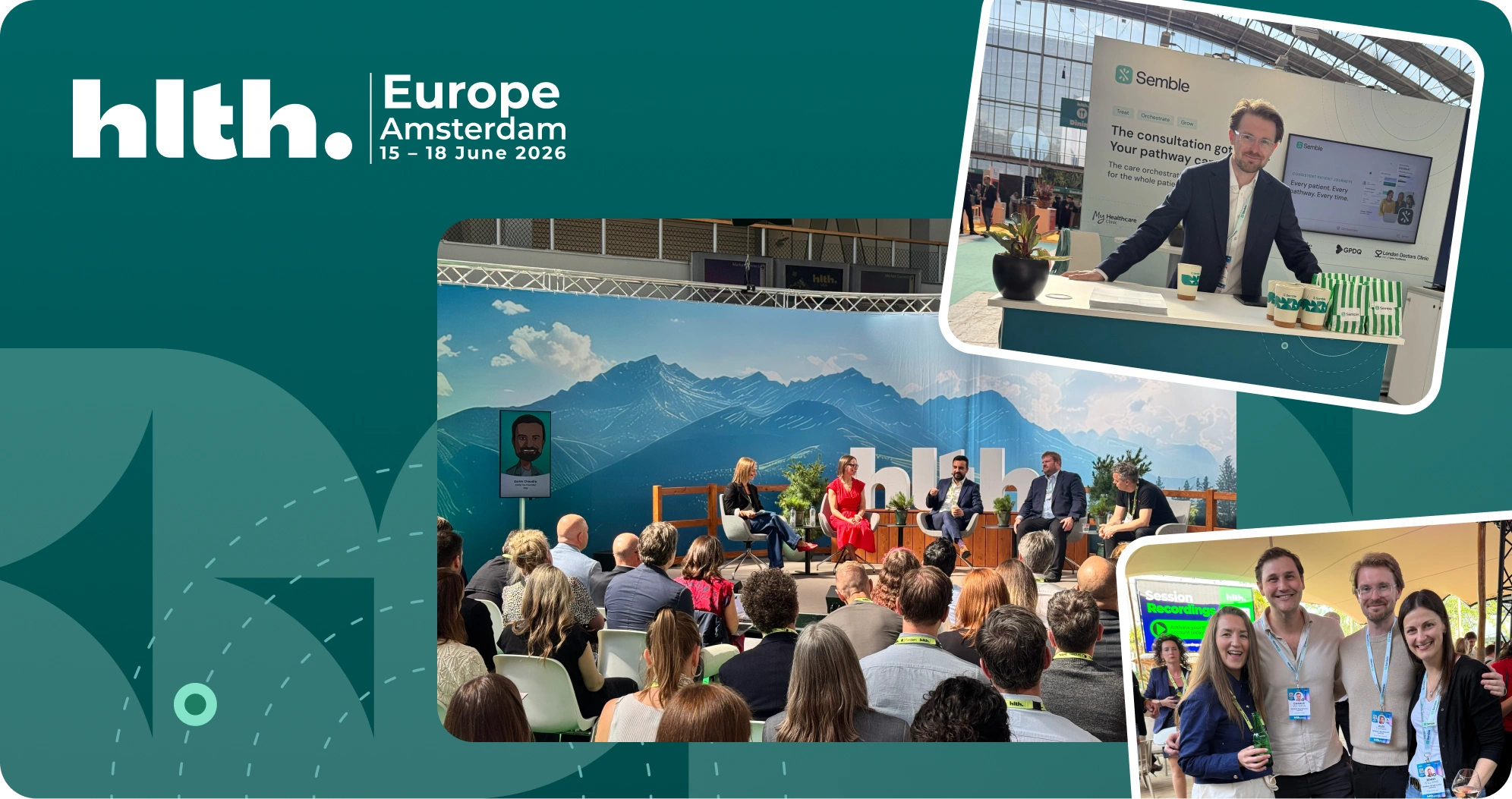


DAY THREE
1pm: The lessons are still coming in strong
It might be our last day at HLTH Europe, but that doesn’t mean we can’t still pick up a key takeaway or two.We caught up with Dr Keith Grimes, founder and CEO of Curistica, who gave us a quick pit-stop education on the role of clinical safety in an AI-powered landscape.
As AI becomes embedded across healthcare, it's easy to assume safety is someone else's responsibility. Keith's message is simple: it isn't.
Clinical safety isn't something to think about after deployment. It's something to build in from the start. As he explains, small investments in safety early on can save a lot of pain later, helping organisations innovate with confidence while keeping patients at the centre.
Listen to Keith's thoughts on why clinical safety officers are more important than ever in the age of AI below.
5pm: That’s a wrap on HLTH Europe for another year
We came, we saw, we connected. Across the week, we spent time with customers, partners and new connections from across the healthcare ecosystem, spanning everything from prevention and digital-first care through to clinical tools and AI.
What stood out was how often our conversations came back to the same challenge: how to make all of these moving parts actually work together around the patient.
Because no one delivers care in isolation, and the real opportunity sits in how we connect the pieces to create something more coherent.
That’s what made HLTH feel so valuable this year: not just the innovation on show, but a growing recognition that better outcomes depend on how well healthcare is connected and coordinated.Thank you to everyone who stopped by the Semble booth and shaped the conversation with us.
See you next year 👋

DAY TWO
9am: Let's do it all again
From AI and interoperability to the patient experience and care orchestration, yesterday gave us plenty to talk about – and we even had a visit from Petunia herself.
We're ready for another day of conversations, connections and caricatures on the HLTH floor - and we've got Semble Co-founders, Christoph Lippuner and Mikael Landau, on the booth today. Come and say hi!
1pm: Can big tech really deliver better healthcare than hospitals?
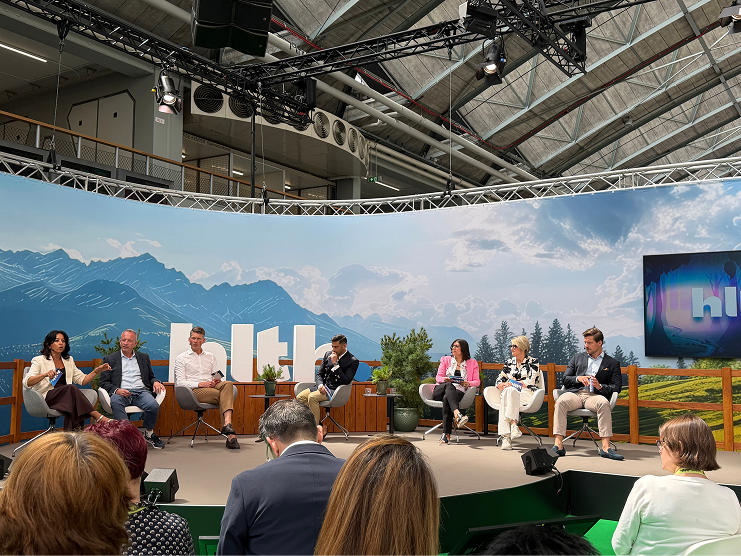
When this Oxford-style debate asked whether big tech will ultimately deliver better healthcare than hospitals, the audience sided with the opposition. While advocates argued that technology can improve access, scale prevention and create more personalised experiences, the discussion repeatedly returned to a central question: can healthcare be reduced to data and algorithms alone?

Speaking against the motion, Nikita Kanani of preventative healthcare screening service (and Semble customer) Neko Health argued that the value of healthcare lies not just in information, but in interpretation, trust and continuity. As she put it, "I spend time with patients and build a relationship over time and tech cannot replace what I offer."
While AI and digital tools can support decision-making, patients still need clinicians to help them navigate complexity and uncertainty. "People use the chatbots and then come to see their physician for the translation," Kanani noted, highlighting the continued importance of human expertise in making sense of increasingly sophisticated health data. (You can read Semble's own research on AI-powered patients right here.)
For healthcare leaders, the debate reinforced a theme that surfaced throughout HLTH: the future is unlikely to be hospitals versus technology, but hospitals and technology. Digital tools may transform how care is accessed, coordinated and delivered, but clinical relationships remain fundamental.
In Kanani's words, "Relationships are not the inefficiency, they are the whole point of healthcare – let's not price them out of the equation." As providers invest in AI and data-driven care models, the challenge will be using technology to strengthen human-centred care rather than replace it.
5pm: That's a wrap on day two
"Healthcare professionals don't experience innovation. They experience complexity."
That was one of Semble Co-founder and CEO Christoph Lippuner’s biggest takeaways from day two at HLTH Europe.
While there's no shortage of innovation across the HLTH floor, the challenge facing healthcare isn't a lack of technology, it's connecting the dots between each step of the patient journey.
When systems, teams and data work together, care becomes more coordinated and ultimately more human. (And when systems *don't* connect, patients feel that complexity too.)
We had some great conversations today about how we get there. See you tomorrow for more.
DAY ONE
9am: We're ready for you!
We're on the ground and looking forward to a few days of important conversations and exchanging ideas with healthcare leaders, innovators and decision-makers.
Last night we attended the HLTH welcome drinks where we ran into some familiar faces in our partners, Healistic and Doctify - and we met a few new faces too. And today, we're excited to get the discussion going around one of healthcare's biggest challenges: creating more connected, efficient patient pathways without adding complexity.
If you're at HLTH this week, come and visit us at Booth C45 to explore how we can improve your patient experiences, support scalable growth and change your pathway for the better.
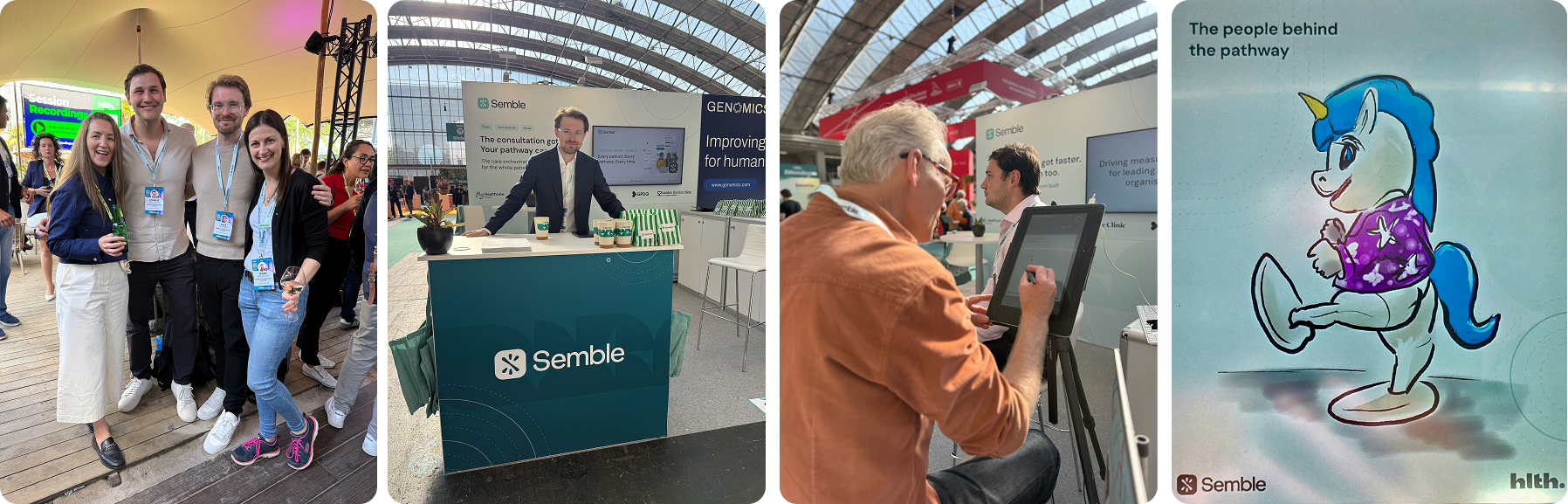
And yes, the rumours are true: we have a caricature artist! Come and get your portrait done whilst we chat about the future of healthcare.
10:40 am: A new era of weight loss treatment with an old model of care
At HLTH Europe’s panel talk ‘Ozempidemic: The rising tide of lowering weight’, Voy Co-founder and CMO, Earim Chaudry, highlighted how obesity care is rapidly exposing the limits of traditional healthcare delivery models. Framed increasingly as a chronic medical condition rather than a lifestyle issue, obesity is driving demand for long-term, structured clinical support, particularly as patients entering treatment often have a history of multiple failed diet attempts. As Chaudry noted, “on average [patients] have 10 failed diets” before seeking medical help, underlining the scale of unmet need in current pathways.
While new therapies like GLP-1-based treatments are demonstrating strong clinical outcomes, the real challenge sits in how systems deliver care at scale. Existing models, heavily reliant on face-to-face, episodic consultations, are struggling to keep pace with rising demand and the need for sustained patient support, especially once patients come off medication, when relapse risk increases without ongoing care pathways in place.
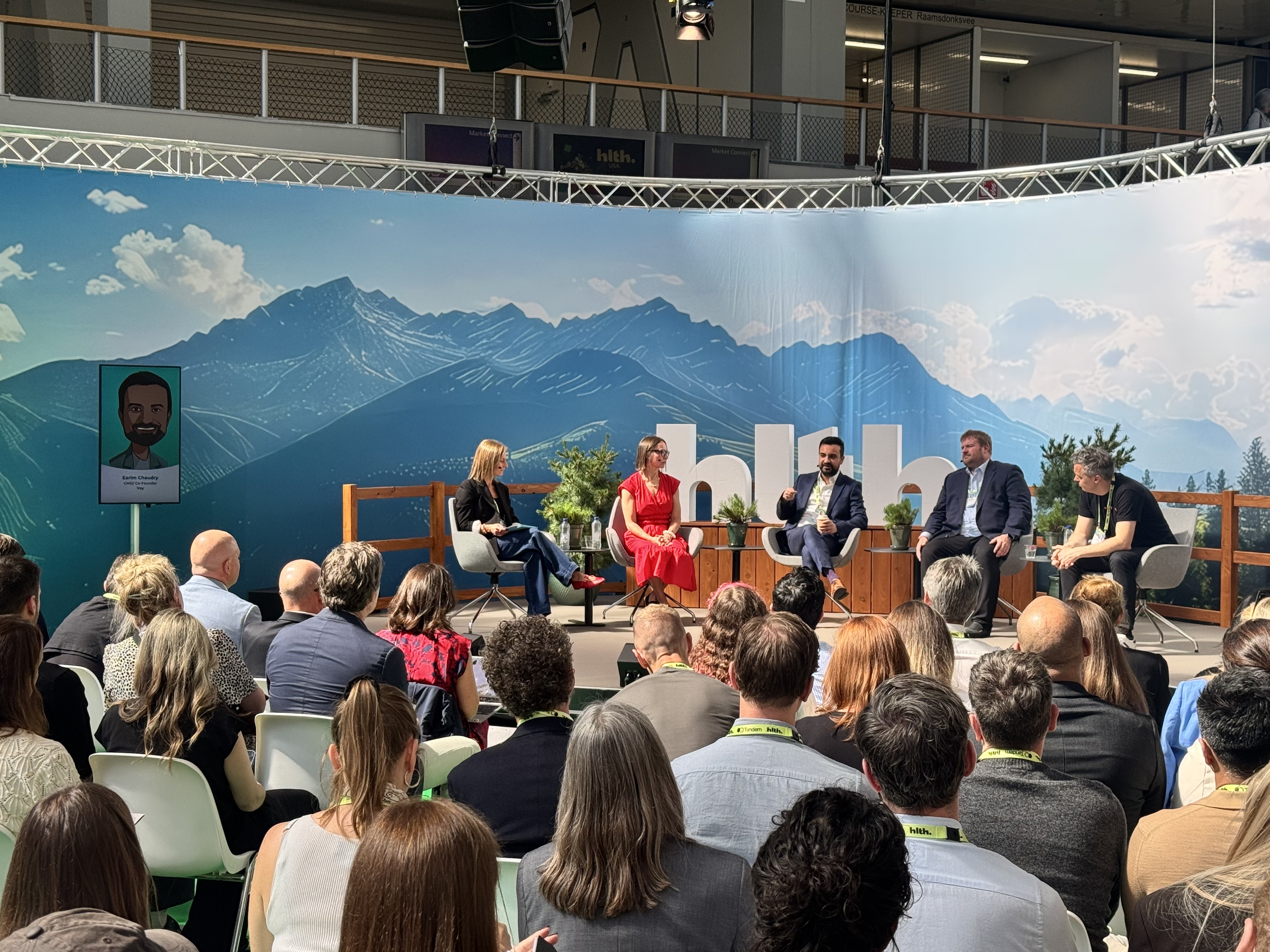
Chaudry, whose company Voy builds personalised weight-loss treatment plans with customers, highlighted the limits of current care models, saying they “can’t cope with the volume” unless they evolve: “In order to serve the sheer number of patients, we need to change the model.”
The session also surfaced wider system pressures, from cost barriers in self-pay markets to persistent stigma that still frames obesity as a behavioural issue, with “55% on treatment hiding from partners” due to the stigma. The takeaway is clear: meeting demand for obesity care will require fundamentally new models of continuous, connected care, not incremental improvements to existing pathways.
12PM: Have you found The Pathway yet?
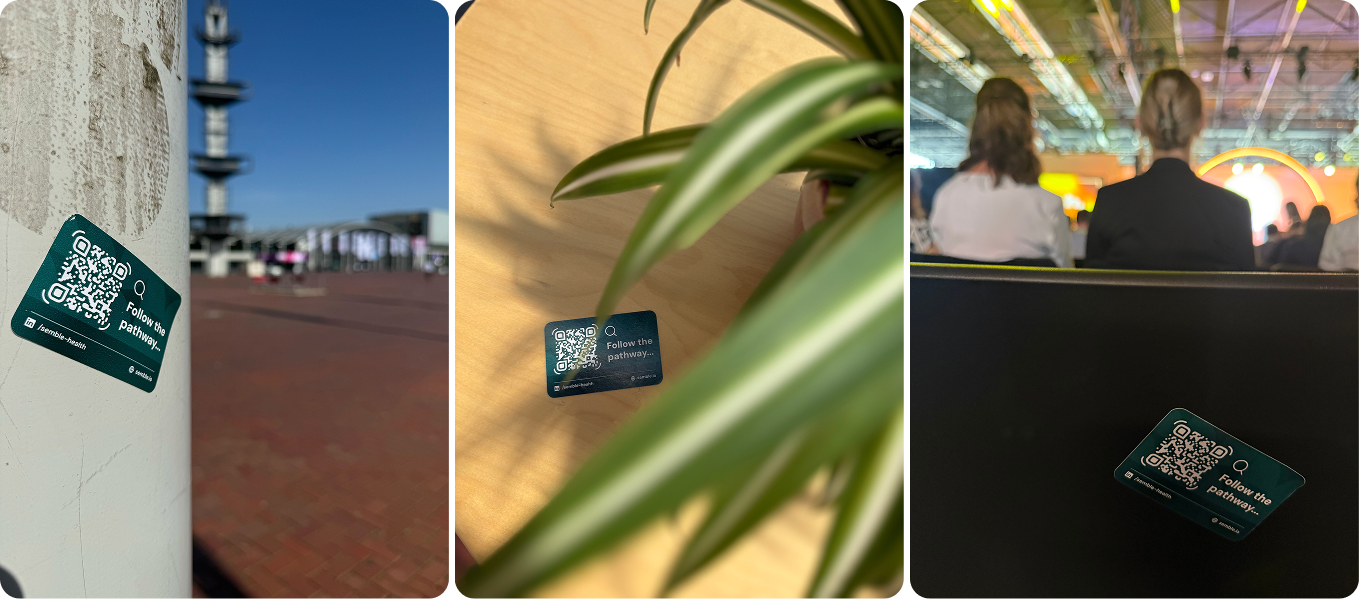
You might have spotted them on plant pots, tables, mirrors and chairs, and the more curious among us may have already scanned and discovered The Pathway. Keep an eye out for signs directing you to our HLTH insights, hidden in some rather unexpected spots...
3pm: More talks to sink our teeth into
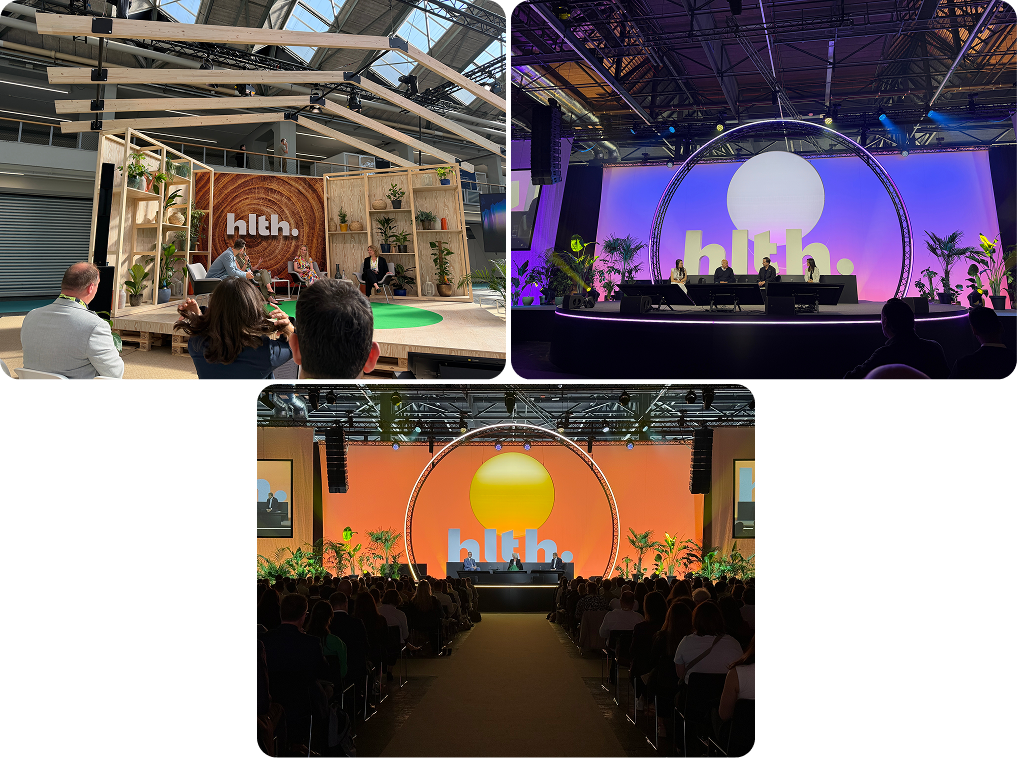
The Semble team have been busy. When they're not chatting to like-minded healthcare leaders about improving the patient journey, they're soaking up all the knowledge from today's talks. From the keynote to 'What it takes to build a world leading health ecosystem', we've got notes from them all - and the pictures to prove it.
5pm: Dr Jenny's Day One wrap-up
"We should be deskilling clinicians in admin tasks."
Day one down in the HLTH Europe village and Semble’s Senior Product Manager Dr Jenny Williams is sharing what resonated with her from the talks she attended today.
And as a former GP, she‘s fully on board with the sentiment above when it comes to using AI for admin: “It would be great to be less skilled at filling in the bits of coloured paper that I used to ferry across the different departments!”
This year's AI conversation feels palpably different. The focus is no longer on what AI can do in theory, but how it performs in practice: in real clinical environments, with real users, at scale.
Stay tuned for our day two roundup tomorrow. We'll be back on the floor bright and early ☀️ 👋
Follow along for live updates of HLTH Europe 2026...
.png)

.webp)